listicle
Advanced Laser Skin Rejuvenation Reviews 2026
Table of Contents
- Advanced Laser & Skin Rejuvenation: What You Need to Know
- Treatment Comparison Table
- Top Laser Skin Rejuvenation Technologies Reviewed
- Laser Skin Rejuvenation Recovery Time: What to Expect
- How to Choose an Aesthetic Practitioner
- Is Laser Skin Rejuvenation Worth It?
- Why Glow with Fatima Stands Out
- Conclusion
- Frequently Asked Questions
Last Updated: September 29, 2026
Advanced Laser & Skin Rejuvenation: What You Need to Know
The global skin rejuvenation market is valued at $2.36 billion in 2026 and is projected to reach $5.22 billion by 2035, growing at a compound annual growth rate of 9.1% Business Research Insights market valuation. This surge reflects a fundamental shift: more people are investing in advanced laser & skin rejuvenation not as a luxury, but as a clinical intervention for real skin concerns. Clients increasingly seek evidence-based treatments over generic salon offerings, and they want to understand exactly what they're paying for.
The challenge is that laser technology has evolved dramatically. What worked five years ago isn't necessarily what works now. Technologies like picosecond lasers, hybrid fractional systems, and radiofrequency-combined approaches now dominate the landscape. For someone considering treatment, the choice between these options determines not just results, but recovery time, risk profile, and whether the investment actually delivers.
This guide breaks down the most effective laser skin rejuvenation technologies available in 2026, what each does, who benefits most, and what realistic recovery looks like. We'll also address the question most people ask: is it actually worth the cost?
Treatment Comparison Table
| Technology | Best For | Recovery Time | Key Advantage |
|---|---|---|---|
| PicoWay Laser | Pigmentation & acne scars | 3-7 days | Minimal thermal damage |
| Fraxel (FRAX 1550) | Deep wrinkles & sun damage | 7-10 days | Long-lasting texture improvement |
| Lumenis M22 | Versatile multi-concern | 1-3 days | Treats redness, spots, fine lines |
| Halo Laser | Significant results with balance | 5-7 days | Customisable depth control |
| CO2 Laser | Severe scarring & deep wrinkles | 10-14 days | Most transformative results |
Top Laser Skin Rejuvenation Technologies Reviewed
1. PicoWay Laser, Precision for Pigmentation and Scars
The PicoWay system uses picosecond pulses, that's one trillionth of a second, to target pigment and scar tissue with minimal heat damage to surrounding skin. This matters because traditional nanosecond lasers generate more thermal energy, increasing the risk of post-inflammatory hyperpigmentation, especially for darker skin tones.
In clinical practice, this translates to faster healing and lower complication rates. The dual-wavelength technology handles both superficial pigmentation (age spots, melasma) and deeper structural issues like acne scarring. A peer-reviewed case study found that Q-switched laser therapy, a similar picosecond technology, achieved a 70% improvement rate in melasma patients Skin Science MD clinical findings.
Pros:
- High precision with reduced risk of hyperpigmentation
- Faster recovery times compared to traditional ablative lasers
- Effective for many skin tones
Cons:
- May require multiple sessions for optimal results
- Pricing depends on the specific treatment area and the number of sessions required.
Best for: Patients seeking treatment for pigmentation and acne scarring with minimal downtime.
2. Fraxel (FRAX 1550), Deep Resurfacing for Texture
Fraxel uses fractional photothermolysis, which creates thousands of microscopic treatment zones while leaving surrounding skin untouched. This controlled injury triggers your body's natural healing response, stimulating collagen remodelling from within.
The 1550-nanometre wavelength penetrates deep enough to address severe wrinkles, surgical scars, and sun-damaged skin that lighter treatments can't touch. Clinical evidence confirms that repeated laser treatments provide cumulative benefits, each session builds on the last, increasing collagen density and improving skin elasticity Dermatology Times research on cumulative collagen benefits.
Pros:
- Clinically proven efficacy for skin resurfacing
- Long-lasting results for texture and tone improvement
- Addresses deep structural damage
Cons:
- Requires significant downtime for skin healing
- Recovery involves visible peeling and redness
Best for: Addressing deep wrinkles, surgical scars, and significant sun damage.
3. Lumenis M22, Versatile Multi-Application Platform
The M22 combines intense pulsed light (IPL) and non-ablative laser technologies in a modular system. Its Optimal Pulse Technology delivers controlled energy, and multiple filters allow practitioners to target different concerns in a single session, vascular lesions, pigmented spots, fine lines, and redness.
This versatility explains its popularity in clinical settings. Rather than referring patients to multiple specialists, a practitioner can address rosacea, age spots, and early fine lines without switching equipment.
Pros:
- Highly versatile for multiple skin conditions
- Minimal discomfort during treatment
- Effective for vascular and pigmented concerns
Cons:
- Not suitable for all skin types depending on settings
- Results are more subtle than ablative options
Best for: Comprehensive skin rejuvenation, including redness, sun spots, and fine lines.
4. Halo Laser, Hybrid Ablative and Non-Ablative Results
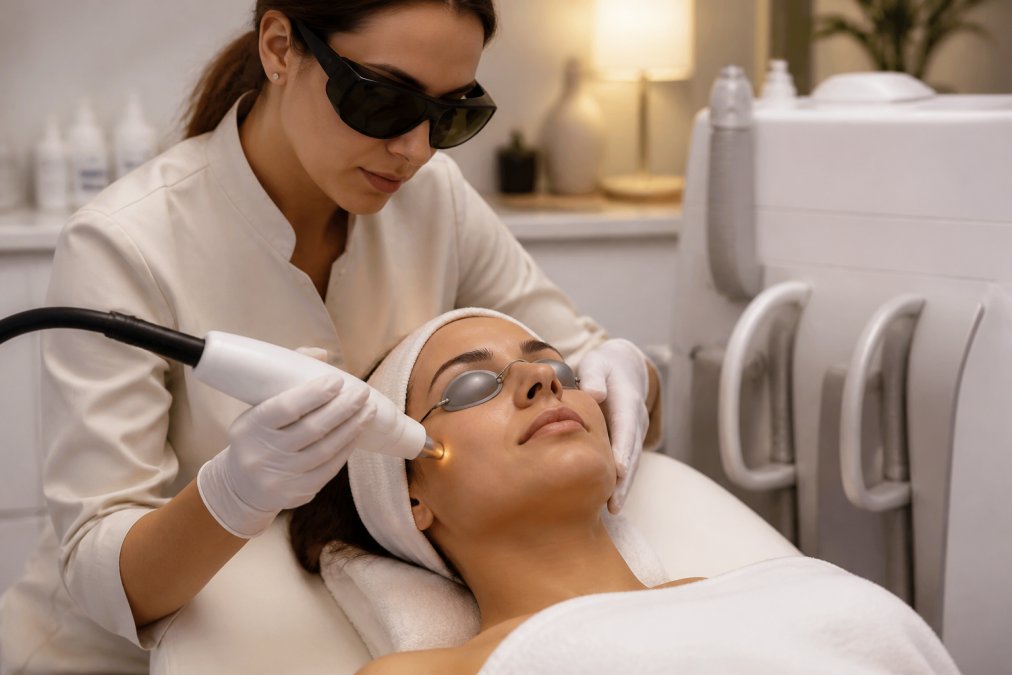
The Halo is the first hybrid fractional laser, delivering both ablative (1927-nanometre) and non-ablative (1470-nanometre) wavelengths simultaneously. This dual approach creates surface renewal while stimulating deeper collagen without the extreme downtime of full ablative systems.
The innovation lies in customisation: practitioners adjust the ratio of ablative to non-ablative energy based on your skin concerns and how much recovery time you can tolerate. Someone with severe scarring might choose higher ablative intensity; someone with fine lines might lean non-ablative.
Pros:
- Customisable treatment depth
- Excellent for overall skin radiance and texture
- Balances results with reasonable recovery
Cons:
- The cost per session may be higher compared to standard IPL.
- Still requires 5-7 days of visible healing
Best for: Patients wanting significant results with a balance of downtime and recovery.
5. CO2 Laser, Transformative Deep Rejuvenation
The CO2 laser is the gold standard for severe skin damage. It delivers high-intensity light that ablates damaged skin layers entirely, triggering profound collagen remodelling. Results are transformative, deep wrinkles flatten, severe scarring improves dramatically, and skin texture becomes noticeably refined.
The trade-off is recovery. CO2 requires 10-14 days of visible healing, during which your skin will be red, peeling, and sensitive.
Pros:
- Dramatic, transformative results
- Effective for long-term skin rejuvenation
- Most powerful option for deep structural damage
Cons:
- Longest recovery time of all listed treatments
- Highest risk of complications if not performed by an experienced practitioner
- Not suitable for all skin types
Laser Skin Rejuvenation Recovery Time: What to Expect
Recovery varies dramatically depending on whether you choose ablative or non-ablative technology. Non-ablative systems (like certain M22 settings or Thermage) cause minimal visible damage, you might see slight redness for a few hours. Ablative systems (Fraxel, Halo, CO2) create controlled injury that requires actual healing time.
How to Choose an Aesthetic Practitioner
The technology matters, but the practitioner matters more. A mediocre laser in expert hands outperforms modern equipment in inexperienced hands.
Is Laser Skin Rejuvenation Worth It?
This depends entirely on your skin concerns and expectations. For someone with mild fine lines, a good skincare routine might deliver 80% of the benefit at a fraction of the cost. For someone with severe acne scarring that's affected their confidence for years, laser treatment can be genuinely transformative.
Why Glow with Fatima Stands Out
In a market flooded with clinics offering the latest technology, Glow with Fatima takes a different approach: evidence-based selection and clinical expertise. Founded by a practitioner with a background in clinical care, the studio specialises in understanding why a particular treatment works for your skin, not just offering what's newest.
Conclusion
Advanced laser skin rejuvenation in 2026 offers genuine clinical results, not just marketing promises. The technology has evolved to the point where picosecond lasers minimise complications, hybrid systems balance results with recovery, and fractional approaches deliver lasting improvements in skin structure.
Frequently Asked Questions
Are laser skin rejuvenation treatments safe?
When delivered by a qualified practitioner using CE and UKCA-certified equipment, laser skin rejuvenation is safe for most skin types. Clinical reviews highlight potential post-treatment complications including post-inflammatory hyperpigmentation, erythema, and scarring, but these are rare with proper technique and patient selection. Q-switched laser therapy, for example, demonstrated a 70% improvement rate in melasma patients with minimal adverse effects. The key is choosing a practitioner with clinical expertise and using evidence-based protocols.
How long do the results of laser skin rejuvenation last?
Results vary depending on the laser type and your skin condition. Repeated treatments provide cumulative improvements in collagen density and skin elasticity, with effects deepening over time. Most patients benefit from a 3-session protocol spaced 4-6 weeks apart for optimal results. Maintenance sessions every 6-12 months help sustain improvements. The global skin rejuvenation market is growing at 9.1% annually, partly because results are durable when combined with a consistent aftercare routine.
What should I look for in aesthetic clinic reviews?
Look for evidence-based treatment protocols, certified equipment (CE and UKCA marks), and practitioners with clinical backgrounds. Check whether the clinic addresses specific skin concerns relevant to you, acne scarring, fine lines, pigmentation, or post-partum skin changes. Read reviews mentioning natural-looking results rather than dramatic transformations. Ask about complication rates and aftercare support. A reputable clinic will provide before-and-after photos and a free consultation to assess your suitability for treatment.
How many laser treatment sessions will I need?
Most skin rejuvenation protocols recommend 3 sessions spaced 4-6 weeks apart for cumulative collagen stimulation and optimal elasticity gains. Some concerns like mild pigmentation may improve in 1-2 sessions, while deeper scars or significant sun damage may require 4-6 sessions. Your practitioner will assess your skin during a consultation and create a personalised treatment plan. The 3-session protocol is often recommended because clinical data suggests this approach can deliver a good balance of results and recovery.
What's the difference between ablative and non-ablative laser treatments?
Ablative lasers (CO2, Er:YAG) remove the outer skin layer, delivering dramatic results but requiring longer downtime, typically 7-14 days of visible healing. Non-ablative lasers (PicoWay, certain Lumenis settings) stimulate collagen without removing skin, causing minimal downtime but subtler results. Hybrid lasers like Halo deliver both for a middle ground: significant improvement with moderate recovery. Your choice depends on your skin concern severity, how much downtime you can tolerate, and your skin tone, darker skin types often benefit from non-ablative or cold-fibre options to reduce hyperpigmentation risk.
Your questions, answered
Are laser skin rejuvenation treatments safe?
When delivered by a qualified practitioner using CE and UKCA-certified equipment, laser skin rejuvenation is safe for most skin types. Clinical reviews highlight potential post-treatment complications including post-inflammatory hyperpigmentation, erythema, and scarring, but these are rare with proper technique and patient selection. Q-switched laser therapy, for example, demonstrated a 70% improvement rate in melasma patients with minimal adverse effects. The key is choosing a practitioner with clinical expertise and using evidence-based protocols.
How long do the results of laser skin rejuvenation last?
Results vary depending on the laser type and your skin condition. Repeated treatments provide cumulative improvements in collagen density and skin elasticity, with effects deepening over time. Most patients benefit from a 3-session protocol spaced 4-6 weeks apart for optimal results. Maintenance sessions every 6-12 months help sustain improvements. The global skin rejuvenation market is growing at 9.1% annually, partly because results are durable when combined with a consistent aftercare routine.
What should I look for in aesthetic clinic reviews?
Look for evidence-based treatment protocols, certified equipment (CE and UKCA marks), and practitioners with clinical backgrounds. Check whether the clinic addresses specific skin concerns relevant to you—acne scarring, fine lines, pigmentation, or post-partum skin changes. Read reviews mentioning natural-looking results rather than dramatic transformations. Ask about complication rates and aftercare support. A reputable clinic will provide before-and-after photos and a free consultation to assess your suitability for treatment.
How many laser treatment sessions will I need?
Most skin rejuvenation protocols recommend 3 sessions spaced 4-6 weeks apart for cumulative collagen stimulation and optimal elasticity gains. Some concerns like mild pigmentation may improve in 1-2 sessions, while deeper scars or significant sun damage may require 4-6 sessions. Your practitioner will assess your skin during a consultation and create a personalised treatment plan. The 3-session protocol is often recommended because clinical data suggests this approach can deliver a good balance of results and recovery.
What's the difference between ablative and non-ablative laser treatments?
Ablative lasers (CO2, Er:YAG) remove the outer skin layer, delivering dramatic results but requiring longer downtime—typically 7-14 days of visible healing. Non-ablative lasers (PicoWay, certain Lumenis settings) stimulate collagen without removing skin, causing minimal downtime but subtler results. Hybrid lasers like Halo deliver both for a middle ground: significant improvement with moderate recovery. Your choice depends on your skin concern severity, how much downtime you can tolerate, and your skin tone—darker skin types often benefit from non-ablative or cold-fibre options to reduce hyperpigmentation risk.