blog
Choosing an Aesthetic Clinic in London: 2026 Guide
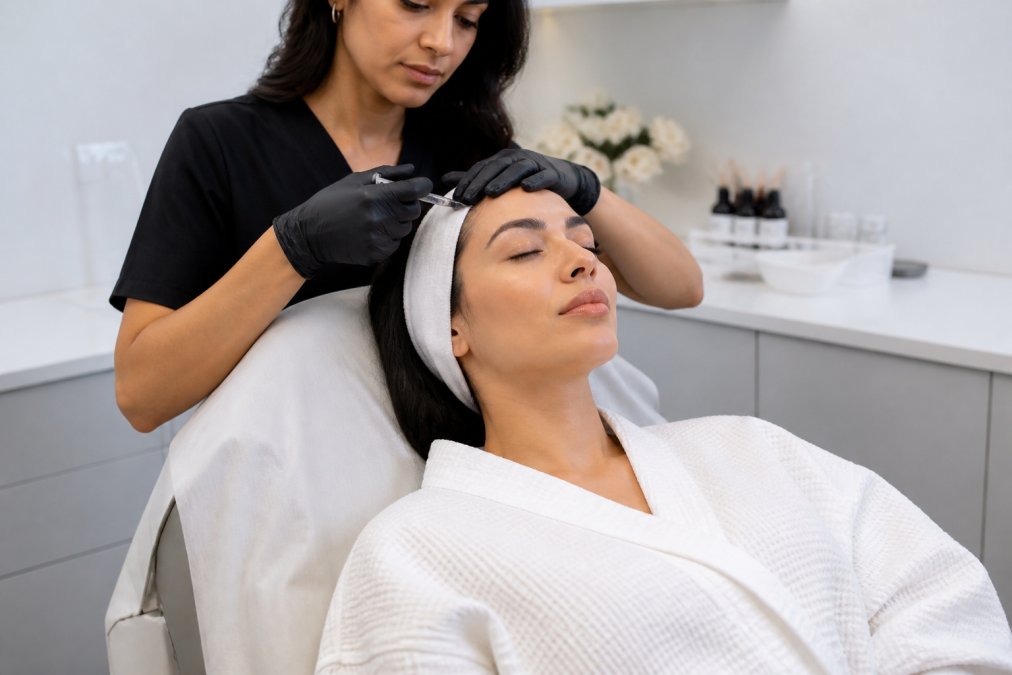
Table of Contents
- What a Good Aesthetic Clinic in London Looks Like in 2026
- CQC Registered Aesthetic Clinics: What That Status Actually Tells You
- How to Verify Aesthetic Practitioner Credentials Before You Book
- Aesthetic Treatment Consultation Questions Worth Asking
- Medical Aesthetic Clinic or Beauty Salon: How to Tell the Difference
- What Treatments an Aesthetic Clinic in London Offers and Who They Suit
- Common Mistakes People Make When Booking Aesthetic Treatments
- Frequently Asked Questions
Last Updated: September 11, 2026
What a Good Aesthetic Clinic in London Looks Like in 2026
The non-invasive aesthetics industry grew by 8% to 9% this year, according to PolicyBee's aesthetics industry statistics, and that growth has made choosing an aesthetic clinic in London harder, not easier. More providers, more devices, more claims. The UK now has 5,589 clinics and 19,701 practitioners, a figure that has risen from 3,667 in 2023 (UCL News research on the botulinum toxin industry(https://www.ucl.ac.uk/news/2026/feb/rise-uk-aesthetic-botulinum-toxin-industry-outpacing-regulation)). Regulation has not kept pace.
A good aesthetic clinic in London is one where a qualified practitioner assesses your skin, explains the evidence behind each treatment, and tells you when a treatment is not right for you. Everything else, the interior, the Instagram feed, the "before and after" wall, is secondary.
Below, we break down how to separate a genuinely medical-led clinic from a salon with a device, what to ask before you book, and the mistakes that cost people money and results.
CQC Registered Aesthetic Clinics: What That Status Actually Tells You
CQC registration means the Care Quality Commission has assessed a provider against regulated standards for safety and governance. It is not a quality badge for cosmetic outcomes, and many treatments fall outside its scope entirely.
The distinction matters because "CQC registered" gets used loosely in marketing. A clinic may hold registration for one regulated activity while offering other treatments that sit outside that registration. Ask which specific activity is registered, not whether the clinic is "CQC registered" as a blanket statement.
Where the Register Does and Doesn't Apply
Registration applies to providers delivering regulated activities, which generally covers surgical procedures and certain medical interventions. Many injectable and device-based treatments sit in a grey zone.
A 2026 study mapping the industry found that doctors make up 28.4% of practitioners and non-medical aestheticians 24.8% (PMC study on the UK aesthetic medicine industry(https://pmc.ncbi.nlm.nih.gov/articles/PMC12892226/)). That spread tells you the register alone cannot guarantee who is holding the needle or the device.
How to Verify Aesthetic Practitioner Credentials Before You Book
Verification takes about ten minutes and covers three things: professional registration, insurance, and specific training in the treatment you are booking.
Start with the register that matches their profession. Doctors appear on the General Medical Council register, nurses on the Nursing and Midwifery Council register, and dentists on the General Dental Council register. If a practitioner cannot tell you which body regulates them, that is your answer.
Checking Registration and Insurance in Practice
- Confirm the practitioner's name on the relevant professional register
- Ask which indemnity insurer covers the specific treatment
- Request evidence of training in that exact device or product
- Check whether a prescriber is involved for any injectable treatment
- Confirm who handles complications, and where
The rapid growth in practitioner numbers has outpaced the frameworks meant to govern them, as UCL researchers noted in 2026. That makes your own checks more important, not less.
Aesthetic Treatment Consultation Questions Worth Asking
Ask what the practitioner would change about your treatment plan if it were their own face. The answer reveals whether you are getting clinical reasoning or a sales script.
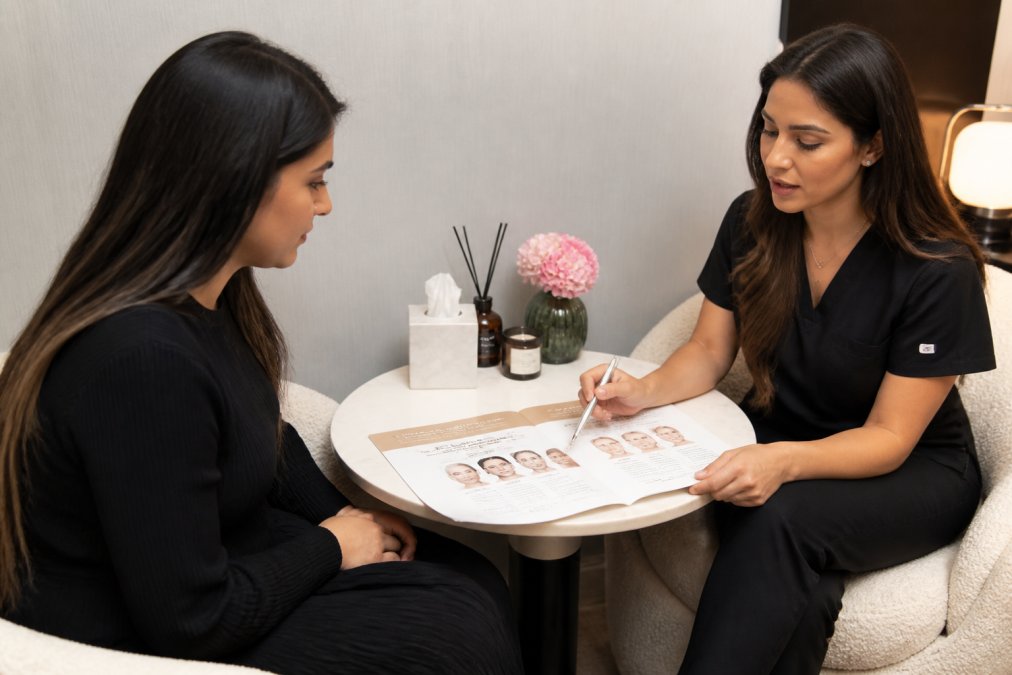
The questions below separate a genuine consultation from a five-minute upsell:
- What is the evidence base for this treatment, and what results should I realistically expect?
- How many sessions will I need, and what happens if I stop after one?
- What are the risks, and how are complications managed?
- Who performs the treatment, and what is their training in it?
- What would you recommend if I decided against this treatment?
A clinic that welcomes these questions is usually a clinic worth your money. One that deflects them is not.
Medical Aesthetic Clinic or Beauty Salon: How to Tell the Difference
The dividing line is clinical assessment. A medical aesthetic clinic assesses your skin, history, and goals before proposing anything; a beauty salon typically works from a fixed menu.
That difference shows up in the paperwork. Clinics record medical history, consent, and aftercare instructions. They also tend to be transparent about pricing, though only 52% of clinics publish prices at all (Mapping the UK Aesthetic Medicine Industry(https://pmc.ncbi.nlm.nih.gov/articles/PMC12892226/)).
Where a salon may offer a single device and a single protocol, an aesthetic clinic in London matches the treatment to the concern. The shift toward medically-led care, seen in CQC-registered providers across the capital, reflects growing client demand for exactly that.
What Treatments an Aesthetic Clinic in London Offers and Who They Suit
Most clinics now offer skin rejuvenation, pigmentation correction, scar treatment, and under-eye revitalisation, but suitability varies far more than the menus suggest.
| Treatment Area | Best Suited To | Typical Sessions |
|---|---|---|
| Skin rejuvenation | Fine lines, dull texture, early laxity | 3 sessions |
| Scar treatment | Acne and surgical scarring | 3-6 sessions |
| Under-eye revitalisation | Dark circles, crepey texture | 3 sessions |
| Pigmentation correction | Sun damage, uneven tone | 3-6 sessions |
| Facial contouring | Mild volume loss | Varies by plan |
Glow with Fatima offers a 3-session protocol for optimal results because collagen remodelling builds over weeks, not days. Results deepen with each session rather than appearing overnight.
Common Mistakes People Make When Booking Aesthetic Treatments
The most expensive mistake is booking on price alone. Discounted treatments often mean a less experienced practitioner, a lower-grade device, or a rushed consultation.
The second is skipping the patch test or medical history form because you are eager to start. The third is expecting surgical-level change from a non-surgical treatment, then concluding the whole category does not work.
A common mistake is treating a course of treatment as optional. Collagen and elastin stimulation is cumulative; stopping after one session usually means paying for a fraction of the result.
The fourth mistake is failing to ask what happens if you are unhappy. A clinic with a clear review and revision policy is telling you something about how it handles outcomes.
Frequently Asked Questions
How do I choose a reputable aesthetic clinic?
Start by checking whether the clinic is registered with the Care Quality Commission, which regulates independent healthcare providers in England. Then confirm the practitioner's registration with their professional body, such as the GMC for doctors or the NMC for nurses. Ask about the equipment used and whether it carries UKCA or CE certification. Research from PMC shows pricing is publicly listed by only 52% of clinics, so request a full cost breakdown in writing before booking. A clinic that answers these questions openly is usually one worth considering.
What qualifications should my aesthetic practitioner have?
A 2026 study published in PMC found that doctors make up 28.4% of aesthetic practitioners, with non-medical aestheticians at 24.8%. Depending on the treatment, your practitioner should hold a relevant clinical qualification and be registered with a body such as the GMC, NMC, or GDC. For injectables and energy-based devices, ask specifically about training on that device and whether they hold indemnity insurance. Knowing how to verify aesthetic practitioner credentials means checking these registrations directly rather than relying on a clinic's marketing.
What should I ask during an aesthetic consultation?
Bring a short list of aesthetic treatment consultation questions: what results are realistic for your skin concern, how many sessions are needed, what the downtime involves, and what happens if something goes wrong. Ask who will perform the treatment and what their registration is. Request before-and-after examples of clients with similar concerns. Also ask about the equipment's certification, since UKCA and CE marks indicate a device meets UK safety requirements. A thorough consultation should take time, not feel rushed.
Are aesthetic clinics in the UK regulated?
Regulation is partial. The CQC registers clinics that provide regulated activities, but many cosmetic procedures fall outside its scope. UCL research from 2026 found that practitioner numbers rose from 3,667 in 2023 to 19,701, outpacing the current regulatory framework. This means standards vary widely between providers. Your best protection is to check CQC registration where it applies and independently verify the individual practitioner's credentials with their professional regulator before committing to any treatment.
Choosing an aesthetic clinic in London comes down to one question: does this practitioner put clinical judgement ahead of the treatment menu? Glow with Fatima was founded on that principle, with evidence-based protocols, CE and UKCA-certified medical-grade equipment, and a three-session approach designed around how skin actually regenerates. If you want a plan built around your skin rather than a package, book a free consultation with Glow with Fatima and find out what your skin genuinely needs.
Your questions, answered
How do I choose a reputable aesthetic clinic?
Start by checking whether the clinic is registered with the Care Quality Commission, which regulates independent healthcare providers in England. Then confirm the practitioner's registration with their professional body, such as the GMC for doctors or the NMC for nurses. Ask about the equipment used and whether it carries UKCA or CE certification. Research from PMC shows pricing is publicly listed by only 52% of clinics, so request a full cost breakdown in writing before booking. A clinic that answers these questions openly is usually one worth considering.
What qualifications should my aesthetic practitioner have?
A 2026 study published in PMC found that doctors make up 28.4% of aesthetic practitioners, with non-medical aestheticians at 24.8%. Depending on the treatment, your practitioner should hold a relevant clinical qualification and be registered with a body such as the GMC, NMC, or GDC. For injectables and energy-based devices, ask specifically about training on that device and whether they hold indemnity insurance. Knowing how to verify aesthetic practitioner credentials means checking these registrations directly rather than relying on a clinic's marketing.
What should I ask during an aesthetic consultation?
Bring a short list of aesthetic treatment consultation questions: what results are realistic for your skin concern, how many sessions are needed, what the downtime involves, and what happens if something goes wrong. Ask who will perform the treatment and what their registration is. Request before-and-after examples of clients with similar concerns. Also ask about the equipment's certification, since UKCA and CE marks indicate a device meets UK safety requirements. A thorough consultation should take time, not feel rushed.
Are aesthetic clinics in the UK regulated?
Regulation is partial. The CQC registers clinics that provide regulated activities, but many cosmetic procedures fall outside its scope. UCL research from 2026 found that practitioner numbers rose from 3,667 in 2023 to 19,701, outpacing the current regulatory framework. This means standards vary widely between providers. Your best protection is to check CQC registration where it applies and independently verify the individual practitioner's credentials with their professional regulator before committing to any treatment.