ultimate-guide
Blue Light Therapy: A 2026 Guide to Clearer Skin
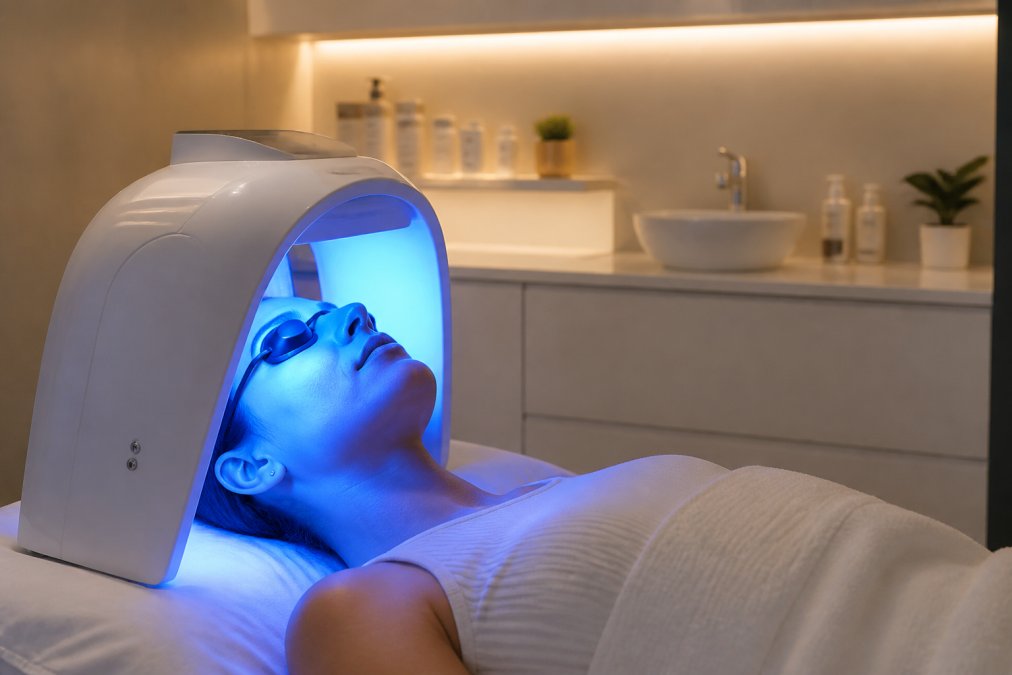
Table of Contents
- What Blue Light Therapy Actually Does to Skin
- Blue Light Therapy for Acne: What the Evidence Shows
- How Long Does Blue Light Therapy Take to Work?
- Blue Light Therapy Side Effects and Safety
- What to Expect During a Professional Session
- Making Blue Light Therapy Part of a Broader Skin Plan
- Frequently Asked Questions
Last Updated: September 10, 2026
What Blue Light Therapy Actually Does to Skin
Blue light therapy is a non-invasive treatment that uses specific wavelengths of visible blue light to target acne-causing bacteria and calm inflammation in the skin. Unlike UV light, which damages DNA, blue light at therapeutic wavelengths works on the surface without harming deeper tissue.
The mechanism is straightforward. Blue light activates porphyrins, natural compounds produced by Cutibacterium acnes bacteria. When activated, these porphyrins generate reactive oxygen species that destroy the bacteria from within. This reduces the bacterial load that drives inflammatory acne.
What most guides miss is that blue light also has an anti-inflammatory effect on the skin itself. This dual action, antibacterial plus calming, is why it works well for red, inflamed breakouts rather than blackheads or cystic lesions.
Clients often expect blue light therapy to work like a magic eraser. It doesn't. It works gradually, and it works best when combined with a proper skincare routine.
Blue Light Therapy for Acne: What the Evidence Shows
The evidence for blue light therapy in treating mild to moderate acne is reasonably solid. Multiple peer-reviewed studies have shown reductions in inflammatory lesion counts after consistent treatment. The NHS overview of acne treatments acknowledges light therapy as an option when topical treatments haven't worked or aren't tolerated.
That said, the evidence is strongest for inflammatory acne, the red, angry spots. It's less effective for comedonal acne, the blackheads and whiteheads that aren't inflamed. If your breakouts are mostly non-inflammatory, blue light therapy alone probably won't deliver the results you want.
How It Compares to Other Acne Treatments
Blue light therapy sits in a useful middle ground. It's more targeted than most over-the-counter creams but less aggressive than prescription isotretinoin.
| Treatment | Best For | Typical Commitment | Main Drawback |
|---|---|---|---|
| Blue light therapy | Mild-moderate inflammatory acne | 4-8 weeks of sessions | Gradual results |
| Topical retinoids | Comedonal and inflammatory acne | 12+ weeks daily use | Initial irritation |
| Oral antibiotics | Moderate-severe inflammatory acne | 3-6 months | Resistance risk |
| Isotretinoin | Severe, stubborn acne | 4-6 months | Significant side effects |
The advantage of blue light therapy is its safety profile. You can combine it with topicals and other treatments without the interaction concerns that come with oral medications.
How Long Does Blue Light Therapy Take to Work?
Most people notice improvement after four to eight weeks of consistent treatment. Blue light therapy is not a single-session fix. The bacteria need repeated exposure to be suppressed, and your skin needs time to calm down.
For professional treatments, a typical protocol involves sessions twice weekly for four to six weeks, then maintenance sessions as needed. Home devices usually require daily or every-other-day use for similar results.
Session Duration and Treatment Schedule
Professional sessions typically last 15 to 30 minutes, depending on the device and the area being treated. You'll sit with your face positioned near the light panel, eyes protected. There's no downtime, no peeling, no recovery period.
A realistic schedule looks like this:
- Weeks 1-2: Sessions twice weekly, early changes in inflammation
- Weeks 3-4: Visible reduction in active breakouts
- Weeks 5-8: Continued improvement, fewer new lesions
- Ongoing: Maintenance sessions every two to four weeks
Consistency matters more than intensity. Skipping sessions undermines the cumulative effect.
Blue Light Therapy Side Effects and Safety
Blue light therapy side effects are generally mild and temporary. The most common complaints are dryness, slight redness immediately after treatment, and occasional sensitivity. These typically resolve within hours.
More serious reactions are rare but possible. Some people experience temporary hyperpigmentation, particularly those with darker skin tones. This is why professional assessment matters before starting treatment.
The MHRA guidance on medical devices sets standards for the equipment used in clinical settings. At Glow with Fatima, we use CE and UKCA-certified medical-grade devices, which means they meet the safety and performance requirements for their intended use.
Who Should Avoid Blue Light Therapy
Blue light therapy isn't suitable for everyone. You should avoid it if you:
- Are taking photosensitising medications such as certain antibiotics or isotretinoin
- Have porphyria or another condition that causes light sensitivity
- Are pregnant or breastfeeding, unless cleared by your GP
- Have active cold sores or open wounds in the treatment area
If you have darker skin, discuss pigmentation risk with your practitioner first. A patch test on a small area can reveal how your skin responds.
What to Expect During a Professional Session
A professional blue light therapy session is straightforward and comfortable. You'll cleanse your face, remove any makeup, and sit or recline while the practitioner positions the light panel.
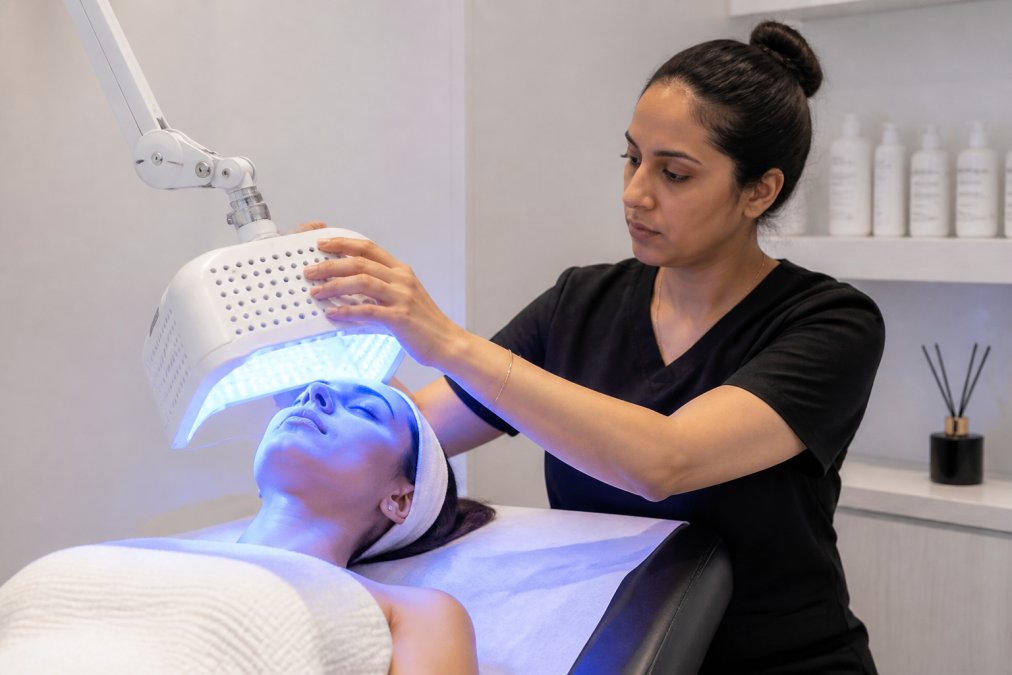
The light itself is bright but not painful. You'll wear protective eyewear. Most people describe the sensation as warm but tolerable. The session runs for 15 to 30 minutes, and you can return to your day immediately afterwards.
Making Blue Light Therapy Part of a Broader Skin Plan
Blue light therapy works best as part of a comprehensive approach, not as a standalone fix. The British Association of Dermatologists patient information consistently emphasises that acne management combines multiple strategies.
Pair blue light sessions with a gentle cleanser, a non-comedogenic moisturiser, and sun protection. If you're using actives like retinoids or acids, your practitioner can advise on timing to avoid irritation.
For acne scarring, blue light therapy alone won't resolve textural issues. Treatments that stimulate collagen, such as microneedling, address scarring more directly. Many clients combine both: blue light to manage active breakouts, microneedling to improve the texture left behind.
Managing persistent breakouts and the marks they leave behind is frustrating, especially when you've already tried countless products. Glow with Fatima offers evidence-based blue light therapy using CE and UKCA-certified medical-grade equipment, delivered by a practitioner with a clinical care background. Our bespoke approach combines targeted treatments with a personalised skin plan, so you're not guessing what works. Book a free consultation with Glow with Fatima and start a protocol designed around your skin.
Frequently Asked Questions
What are the primary benefits of blue light therapy for acne?
Blue light therapy targets acne-causing bacteria on the skin's surface. The light activates porphyrins produced by Cutibacterium acnes, which destroys the bacteria without damaging surrounding tissue. It also helps reduce inflammation, making it useful for mild to moderate inflammatory acne. Unlike topical antibiotics, it does not contribute to antibiotic resistance. Many people see fewer breakouts and less redness after a course of sessions. It works best as part of a consistent routine rather than a one-off treatment.
Is blue light therapy safe for all skin types?
Blue light therapy is generally well tolerated across all Fitzpatrick skin types. Unlike laser or intense pulsed light treatments, it does not target melanin, so the risk of pigmentation changes is low. That said, anyone taking photosensitising medication, such as certain antibiotics or isotretinoin, should check with a clinician first. People with a history of skin cancer or lupus should also seek medical clearance. A qualified practitioner will assess your skin and medical history before recommending treatment.
How many sessions of blue light therapy are typically required?
The number of sessions required varies depending on the individual's skin and the severity of their acne. Maintenance sessions can help sustain results. Your practitioner will tailor the schedule to your skin, and results build gradually rather than appearing after a single session.
Are there any side effects associated with blue light treatment?
Blue light therapy side effects are usually mild and temporary. Some people experience slight redness, dryness, or a warm sensation during or immediately after treatment. These typically settle within a few hours. Eye protection is essential during sessions because blue light can be uncomfortable for the eyes. Rarely, someone may experience a flare-up of cold sores if they are prone to them, as light can trigger the virus. Discussing your full medical history with your practitioner reduces the risk of unexpected reactions.
Your questions, answered
What are the primary benefits of blue light therapy for acne?
Blue light therapy targets acne-causing bacteria on the skin's surface. The light activates porphyrins produced by Cutibacterium acnes, which destroys the bacteria without damaging surrounding tissue. It also helps reduce inflammation, making it useful for mild to moderate inflammatory acne. Unlike topical antibiotics, it does not contribute to antibiotic resistance. Many people see fewer breakouts and less redness after a course of sessions. It works best as part of a consistent routine rather than a one-off treatment.
Is blue light therapy safe for all skin types?
Blue light therapy is generally well tolerated across all Fitzpatrick skin types. Unlike laser or intense pulsed light treatments, it does not target melanin, so the risk of pigmentation changes is low. That said, anyone taking photosensitising medication, such as certain antibiotics or isotretinoin, should check with a clinician first. People with a history of skin cancer or lupus should also seek medical clearance. A qualified practitioner will assess your skin and medical history before recommending treatment.
How many sessions of blue light therapy are typically required?
The number of sessions required varies depending on the individual's skin and the severity of their acne. Maintenance sessions can help sustain results. Your practitioner will tailor the schedule to your skin, and results build gradually rather than appearing after a single session.
Are there any side effects associated with blue light treatment?
Blue light therapy side effects are usually mild and temporary. Some people experience slight redness, dryness, or a warm sensation during or immediately after treatment. These typically settle within a few hours. Eye protection is essential during sessions because blue light can be uncomfortable for the eyes. Rarely, someone may experience a flare-up of cold sores if they are prone to them, as light can trigger the virus. Discussing your full medical history with your practitioner reduces the risk of unexpected reactions.