comparison
Chemical Peels vs Laser Resurfacing: Key Differences
Table of Contents
- Chemical Peels and Laser Resurfacing: Side-by-Side Comparison
- How Chemical Peels Work
- How Laser Resurfacing Works
- Recovery Time for Laser Skin Resurfacing and Chemical Peels
- Chemical Peel Aftercare Instructions and Skin Maintenance
- Best Skin Rejuvenation Treatment for Acne Scarring
- Which Treatment Should You Choose?
- Frequently Asked Questions
Last Updated: September 27, 2026
Chemical Peels and Laser Resurfacing: Side-by-Side Comparison
The difference between chemical peels and laser resurfacing comes down to mechanism, recovery time, and which skin concerns each addresses best. Both treatments stimulate collagen and improve skin texture, but they work in fundamentally different ways.
Chemical peels use acid-based solutions to exfoliate the skin's outer layers, triggering cellular turnover. Laser resurfacing uses focused light energy to remove damaged skin and stimulate deep collagen remodelling. The choice between them depends on your skin type, the severity of your concerns, and how much downtime you're willing to tolerate.
Research shows that laser treatment demonstrated higher efficacy for melasma with an SMD of 1.53 (95% CI: 0.57, 2.50), whilst chemical peeling showed superior outcomes in treating psoriasis with an SMD of -4.30 (95% CI) Comparative efficacy study of laser versus chemical peeling. This means each treatment excels in different scenarios, and understanding those differences is crucial before booking your first session.
How Chemical Peels Work
Chemical peels work by dissolving the bonds between skin cells, causing the outer layers to shed and reveal fresher skin beneath. The depth of penetration depends on the acid type and concentration. Superficial peels affect only the epidermis, whilst medium and deep peels reach into the dermis where collagen lives.
The most common acids used are salicylic acid (for oily, acne-prone skin), lactic acid (for sensitive skin), and trichloroacetic acid (for deeper concerns). According to MDPI Laser Resurfacing Versus Chemical Peels review, chemical peels remain a preferred trend for patients requiring versatile, ingredient-customised solutions, particularly when they are not ideal candidates for laser therapy.
What makes chemical peels attractive is their flexibility. A practitioner can adjust acid strength, layering, and timing to match your specific skin type and concerns. If you have sensitive skin or darker skin tones prone to post-inflammatory hyperpigmentation, a gentler chemical peel can be tailored to minimise risk whilst still delivering results. This customisation is one reason chemical peels remain popular for diverse patient populations.
Recovery from a superficial peel is minimal, you might see slight redness and flaking for 3-5 days. Medium peels require 7-10 days of downtime, whilst deep peels demand 2-3 weeks of careful wound care. The trade-off: deeper peels deliver more dramatic results but come with greater risk of complications.
How Laser Resurfacing Works
Laser resurfacing uses concentrated light energy to vaporise damaged skin and heat the deeper dermal layers, triggering intense collagen production. Unlike chemical peels, lasers offer precision, a practitioner can calibrate the depth, width, and intensity of each pulse to target specific areas.
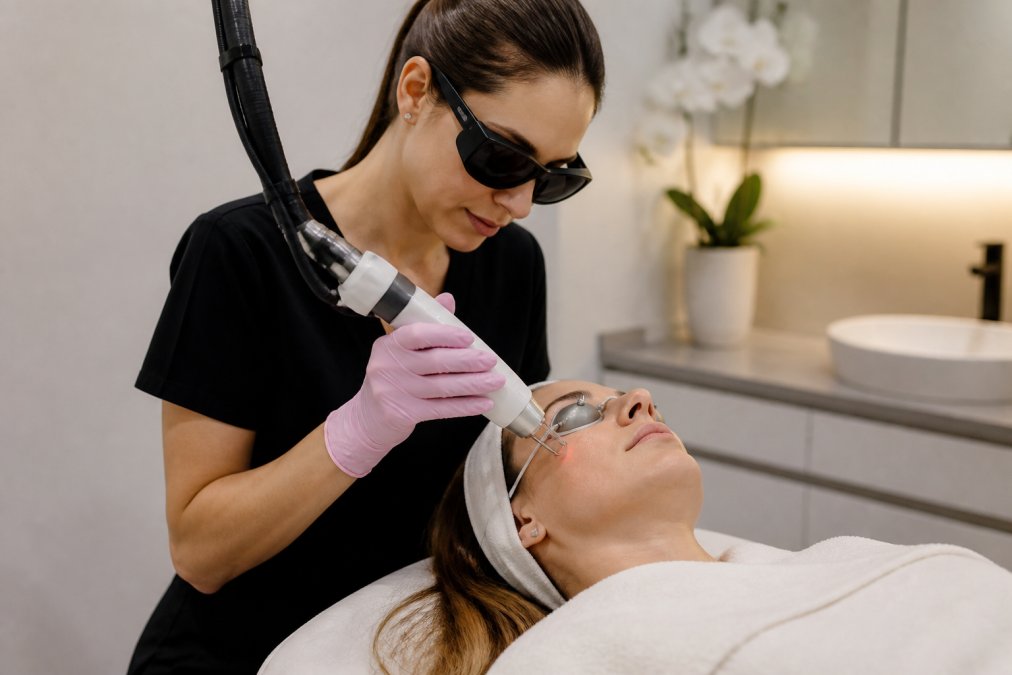
There are two main types: ablative lasers (like CO2) that remove skin tissue, and non-ablative lasers (like picosecond systems) that work without vaporising the surface. Ablative lasers deliver more dramatic results for deep wrinkles and scars but require longer recovery. Non-ablative options are gentler with faster healing, though results are more subtle.
According to Practical Dermatology systematic review, lasers generally require fewer treatment sessions for specific conditions like melasma compared to chemical peels. This efficiency appeals to busy professionals who want results without multiple appointments.
The precision advantage is real. A laser can target a 1mm area without affecting surrounding skin, making it ideal for treating isolated scars, specific pigmentation patches, or fine lines in sensitive zones. The heat also stimulates collagen remodelling that continues improving skin quality for months after treatment.
The downside: ablative laser recovery is substantial. You're looking at 1-2 weeks of raw, weeping skin before it heals. Non-ablative options have minimal downtime but require 4-6 sessions to match the results of a single ablative treatment.
Recovery Time for Laser Skin Resurfacing and Chemical Peels
Recovery time is often the deciding factor for people choosing between these treatments. If you can't afford downtime, the calculus shifts dramatically.
Superficial chemical peels cause light redness and mild flaking lasting 3-5 days. You can wear makeup after day two and return to normal activities immediately.
Medium chemical peels require 7-10 days before you're presentable in public. Expect peeling, sensitivity, and the need for strict sun protection.
Deep chemical peels demand 2-3 weeks of downtime. Your skin will look raw and damaged during healing, and you'll need to follow meticulous aftercare protocols.
Non-ablative laser resurfacing has minimal downtime, perhaps 24-48 hours of mild redness. You can return to work the next day, though sun protection is essential.
Ablative laser resurfacing requires 7-14 days before the skin is fully healed, though redness can persist for weeks. The first week is the most demanding, with weeping skin that needs careful wound care.
The practical reality: if you have a holiday or important event in two weeks, a non-ablative laser is safer. If you can hide away for a month, an ablative laser or deep chemical peel delivers superior results.
Chemical Peel Aftercare Instructions and Skin Maintenance
Aftercare makes or breaks your results. A poorly maintained peel can lead to complications like hyperpigmentation or infection.
For superficial peels, keep your skin clean and moisturised. Avoid active ingredients (retinoids, vitamin C, acids) for 5-7 days. Sunscreen is non-negotiable, SPF 30 minimum, reapplied every two hours if you're outside.
Medium peels require more vigilance. Your skin will peel heavily around days 3-7. Resist the urge to pick or pull flaking skin, let it shed naturally. Use a gentle cleanser, avoid hot water, and apply a healing balm or moisturiser frequently. Again, strict sun protection is essential because your skin is more vulnerable to UV damage during healing.
Deep peels demand clinical-level aftercare. Many practitioners provide specific protocols including prescribed ointments, dressing changes, and scheduled follow-ups. You may need antibiotics to prevent infection. Some people experience temporary lightening or darkening of the treated area, this usually resolves within weeks to months.
The maintenance phase matters equally. After any peel, your skin is more sensitive for 4-6 weeks. Avoid harsh scrubs, strong acids, and unnecessary sun exposure. Use hydrating, soothing products. Many people see their best results 2-3 months post-treatment as the skin continues remodelling.
Best Skin Rejuvenation Treatment for Acne Scarring
Acne scarring is where these treatments diverge most clearly. The type of scar you have determines which approach works best.
Rolling scars (gentle, wave-like depressions) respond well to both treatments but favour laser resurfacing slightly. The heat penetrates deep into the dermis, triggering collagen remodelling that lifts the scarred tissue from beneath.
Boxcar scars (sharply defined, angular depressions) also respond to both, though ablative lasers often outperform chemical peels because they can precisely target the scar's edges and base without affecting surrounding skin.
Icepick scars (narrow, deep punctures) are the most challenging. Chemical peels struggle here because they work primarily on the surface. Ablative lasers can penetrate deep enough to reach the scar base, though even lasers may require multiple sessions or combination treatments.
Patients with severe acne scarring often benefit from a combination approach using chemical peels and laser resurfacing to address deeper structural damage, followed by targeted refinement to improve texture and tone. This layered strategy can maximise results whilst respecting the skin's healing capacity.
Non-ablative lasers like picosecond systems are gentler but require more sessions. If you have darker skin and want to minimise hyperpigmentation risk, a non-ablative laser paired with customised chemical peels is often the safer path.
| Scar Type | Best Treatment | Why | Sessions Needed |
|---|---|---|---|
| Rolling scars | Ablative laser | Deep collagen remodelling | 2-3 |
| Boxcar scars | Ablative laser | Precise edge targeting | 2-4 |
| Icepick scars | Ablative laser | Reaches scar base | 3-5 |
| Mixed scarring | Combination (laser + peel) | Addresses multiple depths | 4-6 |
Which Treatment Should You Choose?
The right choice depends on four factors: your skin concern, your skin type, your available downtime, and your budget.
Choose a chemical peel if: You have mild to moderate concerns like dullness, uneven tone, or superficial texture issues. You're not ideal for laser (darker skin, active acne, sensitivity). You want customisable treatment tailored to your specific skin chemistry. You prefer minimal downtime.
Choose laser resurfacing if: You have deep wrinkles, significant scarring, or structural skin damage. You want fewer total sessions to achieve dramatic results. You can tolerate 1-2 weeks of downtime. You have lighter skin and want precision targeting.
Choose combination treatment if: You have complex concerns requiring multiple approaches (scarring plus pigmentation, for example). You want to maximise results whilst managing risk. You're willing to space treatments across several months.
The clinical evidence is clear: both work, but they excel in different scenarios.
Frequently Asked Questions
Which is more effective for deep wrinkles: chemical peels or laser resurfacing?
Laser resurfacing typically produces more significant results for deep wrinkles because it penetrates deeper into the skin and stimulates substantial collagen production. A 2025 comparative study found laser treatment showed higher efficacy for specific conditions like melasma. However, the best choice depends on your skin type and severity of concerns. Chemical peels work well for fine lines and surface-level damage, whilst ablative lasers like CO2 systems address structural skin changes more effectively.
What is the typical recovery time for laser resurfacing compared to a chemical peel?
Chemical peels typically involve minimal downtime, usually 3 to 7 days depending on peel depth, with mild redness and flaking. Laser resurfacing recovery is longer: non-ablative lasers require 3 to 5 days, whilst ablative CO2 lasers need 10 to 14 days or more. During laser recovery, your skin will be more sensitive and require careful sun protection. Your practitioner will provide detailed recovery time for laser skin resurfacing guidance tailored to your specific treatment.
Can chemical peels and laser resurfacing be combined in one treatment plan?
Yes, many practitioners combine these treatments strategically, but not in a single session. A typical approach involves spacing treatments 4 to 6 weeks apart to allow skin to heal fully between procedures. Combining approaches can address multiple concerns, for example, using laser for deeper scarring and chemical peels for texture refinement. Always consult your practitioner about whether a combined protocol suits your skin condition and goals.
Are chemical peels safer for darker skin tones than laser treatments?
Both treatments can be safe for darker skin tones when performed by experienced practitioners using appropriate settings. Chemical peels offer versatility because practitioners can select customised acid formulations suited to your skin sensitivity. Some laser systems, particularly non-ablative and picosecond lasers, carry lower risk of post-inflammatory hyperpigmentation in darker skin. However, ablative CO2 lasers require more caution. Discuss your skin type openly with your practitioner to determine the safest option for you.
Your questions, answered
Which is more effective for deep wrinkles: chemical peels or laser resurfacing?
Laser resurfacing typically produces more significant results for deep wrinkles because it penetrates deeper into the skin and stimulates substantial collagen production. A 2025 comparative study found laser treatment showed higher efficacy for specific conditions like melasma. However, the best choice depends on your skin type and severity of concerns. Chemical peels work well for fine lines and surface-level damage, whilst ablative lasers like CO2 systems address structural skin changes more effectively.
What is the typical recovery time for laser resurfacing compared to a chemical peel?
Chemical peels typically involve minimal downtime—usually 3 to 7 days depending on peel depth—with mild redness and flaking. Laser resurfacing recovery is longer: non-ablative lasers require 3 to 5 days, whilst ablative CO2 lasers need 10 to 14 days or more. During laser recovery, your skin will be more sensitive and require careful sun protection. Your practitioner will provide detailed recovery time for laser skin resurfacing guidance tailored to your specific treatment.
Can chemical peels and laser resurfacing be combined in one treatment plan?
Yes, many practitioners combine these treatments strategically, but not in a single session. A typical approach involves spacing treatments 4 to 6 weeks apart to allow skin to heal fully between procedures. Combining approaches can address multiple concerns—for example, using laser for deeper scarring and chemical peels for texture refinement. Always consult your practitioner about whether a combined protocol suits your skin condition and goals.
Are chemical peels safer for darker skin tones than laser treatments?
Both treatments can be safe for darker skin tones when performed by experienced practitioners using appropriate settings. Chemical peels offer versatility because practitioners can select customised acid formulations suited to your skin sensitivity. Some laser systems, particularly non-ablative and picosecond lasers, carry lower risk of post-inflammatory hyperpigmentation in darker skin. However, ablative CO2 lasers require more caution. Discuss your skin type openly with your practitioner to determine the safest option for you.