ultimate-guide
Collagen Induction Therapy for Wrinkles: What Works
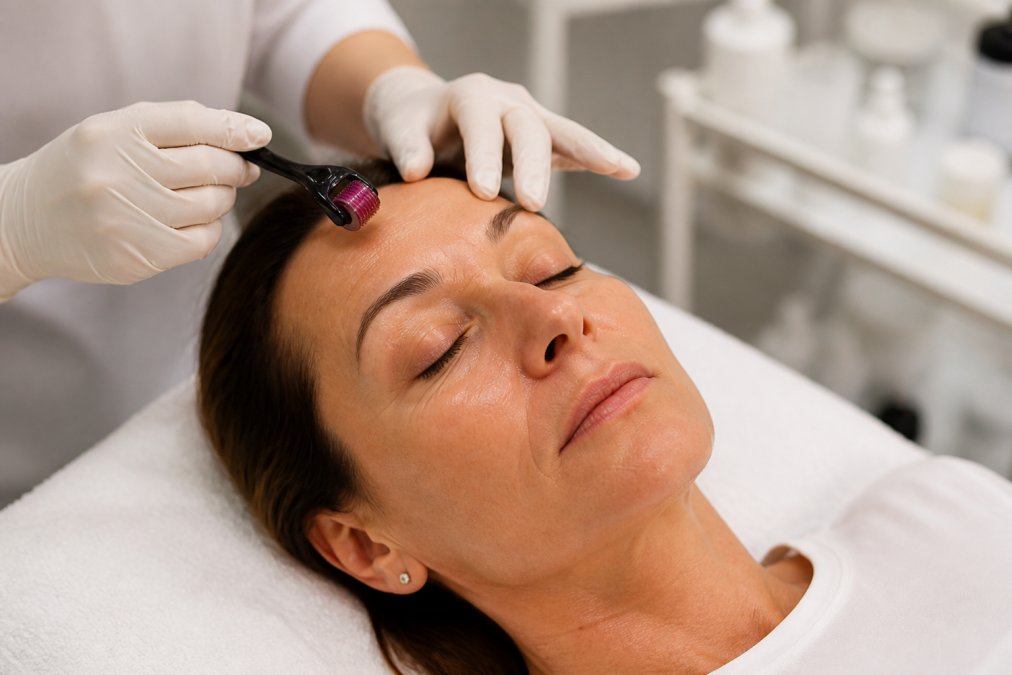
Table of Contents
- How Collagen Induction Therapy Works for Wrinkles
- Measurable Benefits: What the Research Shows
- How Many Microneedling Sessions for Wrinkles
- Microneedling Recovery Time and What to Expect
- Microneedling Aftercare Tips for Best Results
- Is Collagen Induction Therapy Right for You
- Frequently Asked Questions
Last Updated: September 22, 2026
How Collagen Induction Therapy Works for Wrinkles
Collagen induction therapy wrinkles treatment stimulates your skin's natural healing response by creating controlled micro-injuries that trigger the production of new collagen and elastin. This process, also called percutaneous collagen induction (PCI), works at the dermal level where structural proteins live. When the skin recognises these micro-channels, it activates a regenerative cascade that rebuilds the skin's foundation from within.
The science is straightforward. Research from the National Library of Medicine has documented 76 citations in academic literature regarding microneedling efficacy, confirming that this approach stimulates a genuine healing process. Genetic and histologic studies confirm the formation of a normal lattice of collagen, not scar tissue, your body rebuilds what time and sun exposure have broken down.
The beauty of collagen induction therapy for wrinkles is that it works with your body's own repair mechanisms rather than against them. Most topical serums sit on the surface. This treatment reaches the dermis, where wrinkles actually form. You're not masking the problem; you're addressing the structural loss that creates visible lines in the first place.
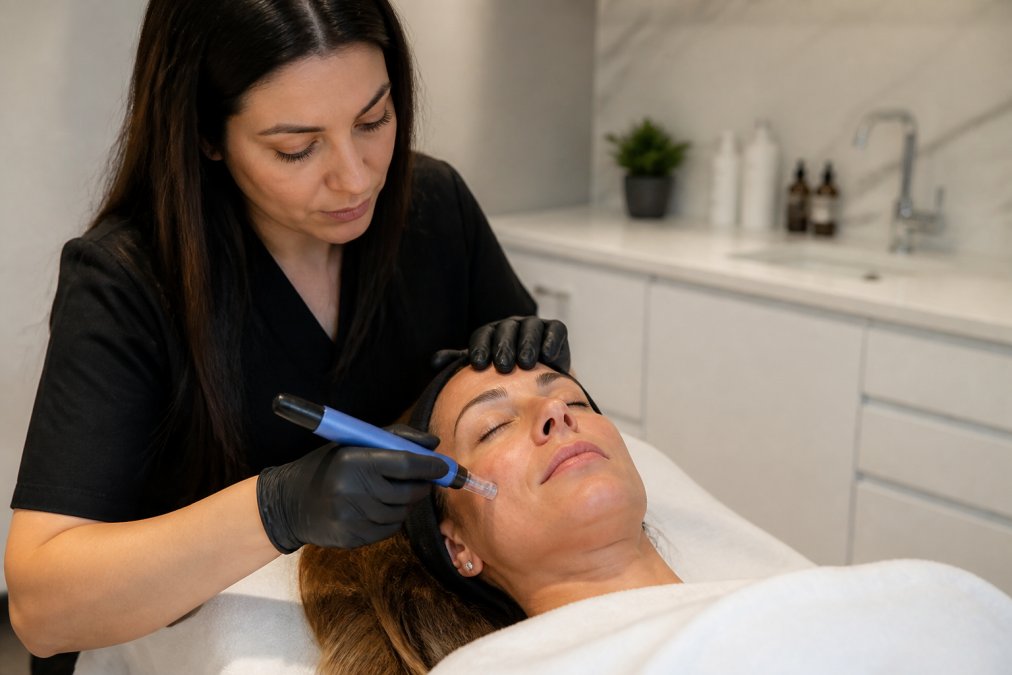
At Glow with Fatima, we use CE and UKCA-certified medical-grade equipment specifically designed to deliver consistent, controlled needling depths. This precision matters. The device creates channels at the exact depth needed to stimulate collagen without causing unnecessary trauma or scarring.
Measurable Benefits: What the Research Shows
The evidence for collagen induction therapy wrinkles reduction is substantial and specific. According to clinical studies in the Journal of Clinical and Aesthetic Dermatology, four microneedling treatments spaced four weeks apart significantly improve lines, wrinkles, skin laxity, and skin texture. This isn't theoretical, it's been measured and documented.
The numbers tell a clear story. Research shows 10-19% improvement in wrinkle parameters compared to untreated baseline, and 13-28% improvement compared to placebo. Those aren't marginal gains. For fine lines and early wrinkles, that level of improvement is visible to the naked eye and measurable on clinical assessment.
What makes collagen induction therapy different from other skin treatments is the duration of benefit. The body doesn't stop producing collagen after one session. According to Healthline's analysis of collagen induction therapy, collagen production continues for 3 to 6 months after treatment. This means your skin keeps improving weeks after you leave the clinic. That extended window is why a protocol of multiple sessions, spaced strategically, delivers compounding results.
The research also highlights something crucial: results depend on the device and technique. A 2026 industry perspective from Kao Aesthetics identifies collagen induction therapy as a top-tier aesthetic treatment for fine lines, early wrinkles, enlarged pores, and textural irregularities. But the quality of the equipment and the skill of the practitioner determine whether you get subtle improvement or transformative results.
How Many Microneedling Sessions for Wrinkles
Most people see meaningful improvement after three to four sessions. This isn't a guess, it's the protocol supported by clinical evidence. The spacing matters as much as the number. Sessions should be four weeks apart, which allows your skin to complete its healing cycle and build collagen before the next treatment stimulates further regeneration.
Why four weeks? Your skin needs time to stabilise after each session. The micro-channels close within hours, but collagen remodelling takes weeks. If you space sessions too close together, you interrupt this process. Too far apart, and you lose momentum. Four weeks is the therapeutic sweet spot.
After three sessions, most people report visible softening of fine lines and improved skin texture. After four sessions, the improvements in collagen induction therapy for wrinkles become more pronounced, deeper lines show meaningful reduction, and skin firmness visibly improves. Some practitioners recommend a fifth session for more advanced wrinkles, but diminishing returns set in after four for most cases.
The duration between sessions also depends on your skin's response. If you're seeing rapid improvement, your practitioner might space sessions slightly further apart. If progress is slower, tighter spacing can help. This is where working with someone experienced matters, they adjust the protocol based on your individual healing capacity and results.
Microneedling Recovery Time and What to Expect
The recovery from collagen induction therapy for wrinkles is genuinely mild compared to invasive procedures, but it's not zero. You'll have visible redness for 24-48 hours after treatment, expect your skin to look like you've had moderate sun exposure. This redness is the inflammatory response that triggers healing, so it's actually a positive sign.
Swelling is minimal and typically resolves within 24 hours. Some people experience slight sensitivity or mild stinging sensations, particularly around sensitive areas like the under-eye zone, but this subsides quickly. Most people return to normal activities the next day.
The key to microneedling recovery time is managing expectations about the timeline. Your skin won't look dramatically different immediately after treatment. In fact, it looks slightly worse for a day or two. The real changes happen over the following weeks as collagen deposits and your skin gradually tightens and smooths. This is why patience is essential, you're not paying for an immediate cosmetic transformation; you're investing in progressive structural repair.
Peeling is common around day three or four. Your skin sheds dead cells as part of the healing process. This isn't damage; it's evidence of renewal. The peeling is usually light, not dramatic, and you can manage it with gentle cleansing and moisturising.
Microneedling Aftercare Tips for Best Results
Microneedling aftercare tips matter more than most people realise. What you do in the 48 hours after treatment directly influences whether you get subtle results or transformative ones. The skin is in a heightened state of receptivity, and aftercare either amplifies or undermines the treatment's benefits.
First priority: protect the skin barrier. Avoid any active ingredients for at least one week, that means no vitamin C serums, retinoids, acids, or peptide complexes. These will irritate freshly treated skin and potentially trigger excessive inflammation. Stick to gentle cleansing with lukewarm water and a soft cloth. Your skin doesn't need aggressive exfoliation; it's already exfoliating naturally.
Hydration is your best tool. Use a hydrating serum or moisturiser immediately after treatment, while your skin is still slightly damp. The open micro-channels act like tiny delivery ports, hydrating ingredients penetrate deeper and work more effectively. This is also when your skin is most receptive to nourishing products, so this is the time to invest in quality hydration.
Sun protection becomes non-negotiable. New collagen is fragile and UV-sensitive. Use SPF 30 minimum for at least two weeks post-treatment, and SPF 50 if you're spending time outdoors. Sun exposure can trigger hyperpigmentation or compromise the collagen-building process. This isn't optional, it's the difference between optimal results and disappointing ones.
Avoid heat and sweating for 24-48 hours. This means no intense exercise, saunas, hot baths, or heated environments. Heat increases blood flow and can intensify redness and swelling. Keep your skin cool and calm while the inflammatory response is active.
Is Collagen Induction Therapy Right for You
Collagen induction therapy works best for specific skin concerns and skin types. If you have fine lines, early wrinkles, or texture irregularities, you're an ideal candidate. The treatment is particularly effective for people in their late twenties through fifties who want to address early signs of ageing without invasive procedures.
Skin type matters less than you'd think. Collagen induction therapy works across all skin tones and types, in fact, it's safer than many alternatives for darker skin tones because it doesn't rely on heat or light-based energy that can cause post-inflammatory hyperpigmentation. That said, if you have active acne, severe rosacea, or open wounds, you'll need to wait until your skin settles before treatment.
The real question is whether you're willing to commit to the protocol.
Frequently Asked Questions
How long does it take to see results from collagen induction therapy?
Initial improvements in skin texture and fine lines appear within 2-3 weeks as the healing response begins. However, visible wrinkle reduction typically becomes apparent after 6-8 weeks, with continued improvement over 3 to 6 months as collagen production deepens. Research shows that four treatments spaced four weeks apart produce the most significant results for lines, wrinkles, and skin laxity.
How many microneedling sessions are needed to see a real difference in wrinkles?
Most clients benefit from a 3-session protocol spaced four weeks apart, which clinical evidence supports as optimal for wrinkle reduction and skin texture improvement. Some individuals see meaningful results after two sessions, whilst others benefit from additional treatments depending on wrinkle depth, skin condition, and individual healing capacity. Your practitioner will assess your skin and recommend a personalised schedule.
What should I do after microneedling to protect my results?
Aftercare is crucial for collagen production and healing. Avoid direct sun exposure, use broad-spectrum SPF 30+ daily, skip active ingredients (retinoids, acids) for 48 hours, keep skin hydrated with gentle moisturisers, and avoid strenuous exercise for 24-48 hours. Don't pick at any flaking skin, and use only clean hands or soft cloths when touching your face. These steps protect the micro-channels and support optimal collagen remodelling.
Is collagen induction therapy safe for all skin types?
Collagen induction therapy is generally safe across skin types when performed by a trained practitioner using CE and UKCA-certified medical-grade equipment. However, certain conditions, active infections, severe eczema, or keloid-prone skin, require assessment beforehand. Darker skin types can experience temporary hyperpigmentation, which resolves with proper aftercare and sun protection. A consultation with a qualified practitioner ensures the treatment is tailored to your specific skin health.
Your questions, answered
How long does it take to see results from collagen induction therapy?
Initial improvements in skin texture and fine lines appear within 2-3 weeks as the healing response begins. However, visible wrinkle reduction typically becomes apparent after 6-8 weeks, with continued improvement over 3 to 6 months as collagen production deepens. Research shows that four treatments spaced four weeks apart produce the most significant results for lines, wrinkles, and skin laxity.
How many microneedling sessions are needed to see a real difference in wrinkles?
Most clients benefit from a 3-session protocol spaced four weeks apart, which clinical evidence supports as optimal for wrinkle reduction and skin texture improvement. Some individuals see meaningful results after two sessions, whilst others benefit from additional treatments depending on wrinkle depth, skin condition, and individual healing capacity. Your practitioner will assess your skin and recommend a personalised schedule.
What should I do after microneedling to protect my results?
Aftercare is crucial for collagen production and healing. Avoid direct sun exposure, use broad-spectrum SPF 30+ daily, skip active ingredients (retinoids, acids) for 48 hours, keep skin hydrated with gentle moisturisers, and avoid strenuous exercise for 24-48 hours. Don't pick at any flaking skin, and use only clean hands or soft cloths when touching your face. These steps protect the micro-channels and support optimal collagen remodelling.
Is collagen induction therapy safe for all skin types?
Collagen induction therapy is generally safe across skin types when performed by a trained practitioner using CE and UKCA-certified medical-grade equipment. However, certain conditions—active infections, severe eczema, or keloid-prone skin—require assessment beforehand. Darker skin types can experience temporary hyperpigmentation, which resolves with proper aftercare and sun protection. A consultation with a qualified practitioner ensures the treatment is tailored to your specific skin health.