how-to
How to Maintain Results After Eye Rejuvenation: 7 Steps
Table of Contents
- Why Maintenance Decides Your Eye Rejuvenation Results
- Your Eye Rejuvenation Aftercare Routine: The First 72 Hours
- How Long Do Under-Eye Rejuvenation Results Last?
- Skincare After Eye Rejuvenation: What to Use and When
- Sun Protection After Eye Treatment: The Non-Negotiable Step
- Building a Maintenance Treatment Schedule That Works
- Lifestyle Habits That Protect Your Results
- When to Book a Review With Your Practitioner
- Frequently Asked Questions
Last Updated: October 21, 2026
Why Maintenance Decides Your Eye Rejuvenation Results
The treatment is the easy part. What happens in the weeks after is what decides whether your results hold or fade.
Clients invest in a course of sessions, love the initial improvement, then drift back into old habits. The glow fades, and they assume the treatment "didn't work." It usually did. The aftercare let it down.
Eye rejuvenation is any non-surgical treatment that improves the skin around the eyes: fine lines, dark circles, crepey texture, and laxity. Results depend on two things working together. First, the treatment itself, which stimulates collagen and elastin. Second, the maintenance routine that protects that new tissue while it matures.
Collagen remodelling takes weeks, not days. Skin needs hydration, protection from UV, and steady care to build on what the treatment started. Skip those, and you're relying on the treatment alone.
Here's what most guides get wrong: they treat aftercare as a short checklist that ends after a week. In practice, maintenance is ongoing. Below, we break down exactly what to do, in order, from the first 72 hours to your long-term schedule.
Your Eye Rejuvenation Aftercare Routine: The First 72 Hours
Your eye rejuvenation aftercare in the first three days is simple: keep the area clean, calm, and protected. Do not try to speed things up with active ingredients.
The skin around your eyes is the thinnest on your body. After treatment, it's also temporarily more sensitive. Your only jobs in this window are:
- Cleanse gently. Use lukewarm water and a mild, fragrance-free cleanser. Pat dry, never rub.
- Moisturise lightly. A basic, unscented eye cream is enough. Skip anything with retinol, acids, or vitamin C.
- Avoid heat. No saunas, hot yoga, or long hot showers for at least 48 hours.
- Sleep slightly elevated. An extra pillow reduces morning puffiness.
- Keep hands off. Touching and rubbing are the fastest route to irritation.
What to Avoid in the First Three Days
Skip makeup on the treated area, intense exercise, and alcohol. Each one increases blood flow or introduces bacteria, and neither helps healing. If you have an event, plan treatment around it, not the other way round.
How Long Do Under-Eye Rejuvenation Results Last?
There is no single answer, because it depends on the treatment. A source on non-surgical eye rejuvenation notes that results can last from several months to years, and that maintenance treatments help preserve them (overview of non-surgical eye rejuvenation). Another source confirms under-eye results are not permanent and recommends maintenance sessions, without fixing a set schedule.
What that means in practice: expect to return for top-ups. How often depends on your treatment type, your skin, and your age. A realistic range is every few months to once a year.
The honest version: anyone promising permanent results from a non-surgical eye treatment is overselling. What you can control is how well you look after the skin between sessions, which is what stretches your results further.
Skincare After Eye Rejuvenation: What to Use and When
Skincare after eye rejuvenation should focus on two jobs: hydration and collagen support. Introduce products gradually, and give each one a week before adding the next.
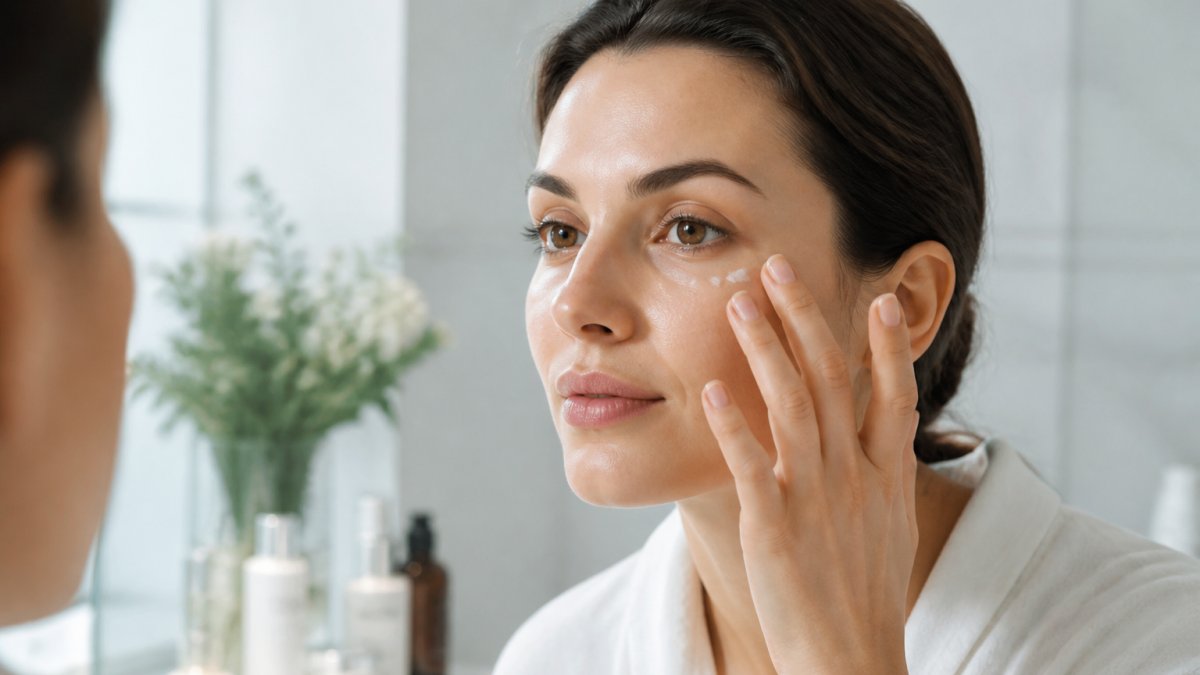
Wait until your practitioner confirms the skin has settled, usually around day five to seven. Then build your routine in this order:
- Hydrating eye cream (start here): look for hyaluronic acid or glycerine.
- Vitamin C serum (morning): supports brightness and defends against daily stress.
- Retinol eye product (evening, low strength): builds collagen over time. Start twice a week.
- Peptides (any time): support the skin's own repair processes.
Ingredients That Support Collagen and Hydration
Hyaluronic acid draws water into the skin and is also used to restore volume after eyelid surgery, according to a study in the Journal of Clinical Medicine on hyaluronic acid after blepharoplasty. Peptides and retinoids support collagen production over the longer term. Introduce one at a time so you can spot anything your skin dislikes.
Sun Protection After Eye Treatment: The Non-Negotiable Step
Sun protection after eye treatment is the single most important habit for keeping results. UV breaks down collagen, and it undoes the work your treatment just did.
Use a broad-spectrum SPF 30 or higher every morning, year-round. Apply it to the eyelids and the area under the eyes, right up to the lash line. Most people skip this zone, which is why it ages fastest.
- Choose a formula labelled eye-safe or ophthalmologist-tested.
- Reapply every two hours outdoors.
- Wear sunglasses with UV protection on bright days.
- Avoid direct sun on the treated area for the first two weeks.
If you only do one thing from this article, make it this one. Nothing else in your routine protects your investment as directly.
Building a Maintenance Treatment Schedule That Works
A maintenance schedule should match your treatment type and your skin's response, not a generic calendar. Your practitioner sets the interval; you keep it.
Here's a simple framework to plan around:
| Timeframe | What to do | Why it matters |
|---|---|---|
| Weeks 1-2 | Gentle routine, SPF, no actives | Lets skin settle |
| Weeks 3-6 | Add vitamin C, then retinol | Builds collagen |
| Months 2-4 | Review with practitioner | Confirms results |
| Every 3-12 months | Maintenance session | Preserves results |
The exact spacing depends on your protocol. At Glow with Fatima, our three-session protocol is designed so each session builds on the last, with results deepening over the course. We'll map your maintenance intervals at your review, based on how your skin responds.
Lifestyle Habits That Protect Your Results
Sleep, hydration, and diet affect your skin more than most people expect. None of these replace treatment, but they change how long results last.
- Sleep seven to nine hours. Poor sleep shows around the eyes first.
- Drink water steadily through the day. Dehydrated skin looks dull and crepey.
- Limit alcohol. It dehydrates skin and worsens puffiness.
- Don't smoke. Smoking breaks down collagen and elastin.
- Manage salt intake. High-salt diets increase fluid retention under the eyes.
- Wear SPF daily, as covered above.
A common mistake is treating lifestyle as separate from results. In practice, it's the foundation the treatment sits on. Clients who sleep well and protect their skin consistently tend to hold their results longer.
When to Book a Review With Your Practitioner
Book a review if you notice changes you're unsure about, or if your scheduled maintenance window is approaching. A review is not a sign something went wrong; it's routine care.
Contact your practitioner sooner if you see:
- Persistent redness or swelling beyond the expected recovery window
- Changes in skin texture that concern you
- Results fading faster than expected
- Any reaction to a new product
A review lets your practitioner assess your skin, adjust your routine, and time your next session properly. Bring your questions and your current product list. The more they know, the better they can tailor the plan.
At Glow with Fatima, every review is a conversation, not a sales pitch. We look at how your skin has responded, what's changed, and what your next step should be.
Maintaining results after eye rejuvenation comes down to consistency, not perfection. Protect your skin from UV, keep it hydrated, follow your practitioner's schedule, and book your reviews. That's what turns a good result into a lasting one.
If you're ready to build a plan around your skin, Glow with Fatima offers evidence-based treatments using CE and UKCA-certified medical-grade equipment, delivered through a personalised, clinically grounded approach. Book a free consultation and we'll map out your treatment and maintenance plan together, so your results hold for the long term.
Frequently Asked Questions
How long do eye rejuvenation results last?
Results vary by treatment and individual factors. Research on non-surgical eye rejuvenation indicates that outcomes can last from several months to years, and maintenance treatments help preserve them. A 2025 study on a 1064-nm lower-eyelid treatment reported significant improvement in under-eye wrinkles at week one and week five, the final session. Because results are not permanent, planning regular top-ups and consistent home care gives you the best chance of holding onto the improvement.
What skincare should I use after eye rejuvenation?
Keep the eye area hydrated and calm. A gentle, fragrance-free eye cream with hyaluronic acid supports the skin barrier, and research describes hyaluronic acid as an adjunct for restoring volume after blepharoplasty. Introduce active ingredients such as retinoids only once your practitioner confirms the skin has settled. Daily broad-spectrum SPF is essential, and you should avoid harsh exfoliants near the eyes until you are cleared to resume your normal skincare after eye rejuvenation.
Can sun exposure affect eye rejuvenation results?
Yes. Ultraviolet exposure breaks down collagen and drives pigmentation, which can undo the improvements you have paid for. Sun protection after eye treatment means a broad-spectrum SPF of 30 or higher every morning, reapplied through the day, plus sunglasses and a hat for direct exposure. The eye area has thin skin that burns and pigment changes easily, so daily protection is one of the simplest ways to make your results last longer.
Do I need maintenance treatments after eye rejuvenation?
Most people do, because results are not permanent. Sources on non-surgical eye rejuvenation recommend maintenance sessions to preserve outcomes, although the ideal interval depends on your treatment type and how your skin responds. Your practitioner can map a schedule at your review appointment, often starting with a check a few months after your final session. Combining maintenance sessions with good eye rejuvenation aftercare at home reduces how often you need to return.
Your questions, answered
How long do eye rejuvenation results last?
Results vary by treatment and individual factors. Research on non-surgical eye rejuvenation indicates that outcomes can last from several months to years, and maintenance treatments help preserve them. A 2025 study on a 1064-nm lower-eyelid treatment reported significant improvement in under-eye wrinkles at week one and week five, the final session. Because results are not permanent, planning regular top-ups and consistent home care gives you the best chance of holding onto the improvement.
What skincare should I use after eye rejuvenation?
Keep the eye area hydrated and calm. A gentle, fragrance-free eye cream with hyaluronic acid supports the skin barrier, and research describes hyaluronic acid as an adjunct for restoring volume after blepharoplasty. Introduce active ingredients such as retinoids only once your practitioner confirms the skin has settled. Daily broad-spectrum SPF is essential, and you should avoid harsh exfoliants near the eyes until you are cleared to resume your normal skincare after eye rejuvenation.
Can sun exposure affect eye rejuvenation results?
Yes. Ultraviolet exposure breaks down collagen and drives pigmentation, which can undo the improvements you have paid for. Sun protection after eye treatment means a broad-spectrum SPF of 30 or higher every morning, reapplied through the day, plus sunglasses and a hat for direct exposure. The eye area has thin skin that burns and pigment changes easily, so daily protection is one of the simplest ways to make your results last longer.
Do I need maintenance treatments after eye rejuvenation?
Most people do, because results are not permanent. Sources on non-surgical eye rejuvenation recommend maintenance sessions to preserve outcomes, although the ideal interval depends on your treatment type and how your skin responds. Your practitioner can map a schedule at your review appointment, often starting with a check a few months after your final session. Combining maintenance sessions with good eye rejuvenation aftercare at home reduces how often you need to return.