how-to
How to Treat Postpartum Hormonal Acne at Home
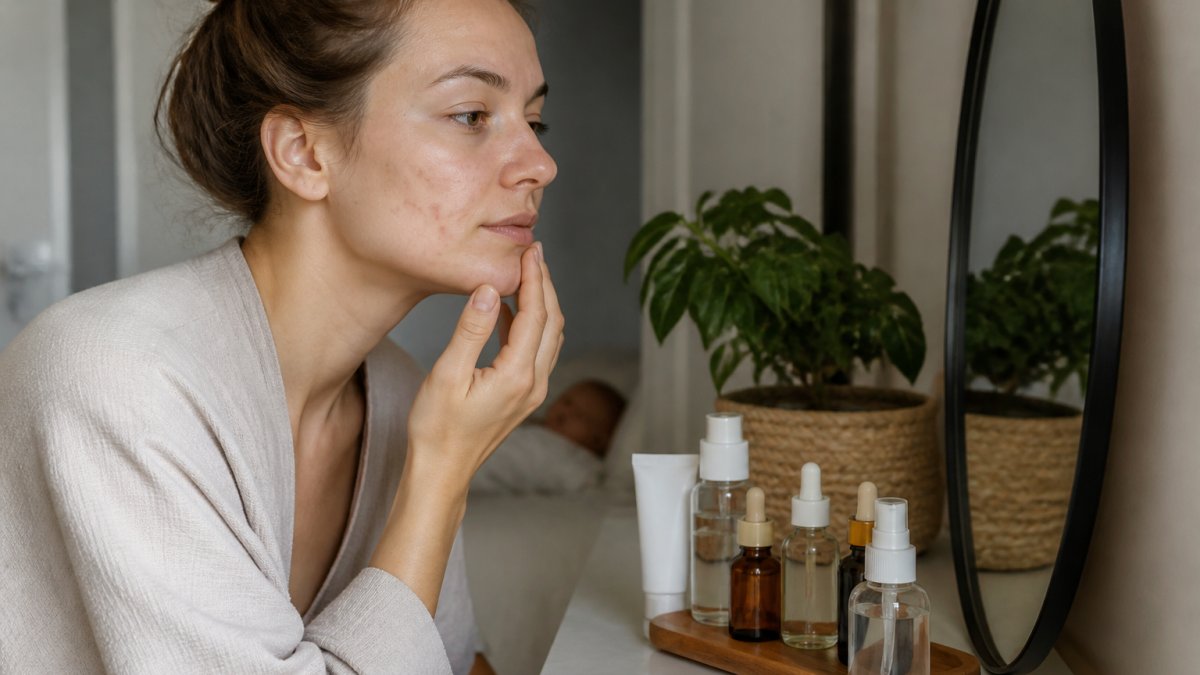
Table of Contents
- How to Treat Postpartum Hormonal Acne at Home: A Gentle, Realistic Approach
- How Long Does Postpartum Acne Last?
- Building a Postpartum Acne Skincare Routine That Won't Irritate Your Skin
- Breastfeeding Safe Acne Treatment: What You Can and Cannot Use
- Natural Remedies for Postpartum Acne: What Helps and What to Skip
- Common Mistakes That Make Postpartum Hormonal Acne Worse
- When to See a GP or Dermatologist About Postpartum Hormonal Acne
- Frequently Asked Questions
Last Updated: October 7, 2026
How to Treat Postpartum Hormonal Acne at Home: A Gentle, Realistic Approach
Postpartum hormonal acne is breakouts that flare up after giving birth, driven by the sharp drop in oestrogen and progesterone once your placenta has done its job. Your skin spent nine months bathed in pregnancy hormones. Now they've fallen away, and your sebaceous glands are responding to the shift.
The good news: it settles. The better news: you can manage it at home without harsh products.
This guide covers how to treat postpartum hormonal acne at home with a routine that respects your skin barrier and your breastfeeding status. Below, we break down what to use, what to avoid, and when to get professional help.
What You'll Need Before You Start
You don't need a ten-step routine. You need four things and some patience.
- A gentle, fragrance-free cleanser. Cream or gel, pH-balanced.
- A treatment active. One only, to start.
- A basic moisturiser. Lightweight, non-comedogenic.
- A broad-spectrum SPF 30 or higher. Non-negotiable if you use any active.
That's it. Adding more products than this is the most common mistake we see. A stripped, irritated barrier produces more spots, not fewer.
How Long Does Postpartum Acne Last?
Most women see postpartum acne ease within three to six months as hormone levels settle, though it can linger for up to a year, particularly if you're breastfeeding or have stopped breastfeeding recently.
The timeline varies. Some women clear up by their six-week postnatal check. Others notice flares around their first few periods after birth, when hormone swings return.
Breastfeeding can extend the picture. Prolactin keeps oestrogen low, which means oil production stays higher for longer. This isn't a reason to stop feeding. It's just useful context so you don't panic when month four looks worse than month two.
If you're still breaking out a year after giving birth, that's worth a conversation with a GP rather than more trial and error.
Building a Postpartum Acne Skincare Routine That Won't Irritate Your Skin
The goal is simple: calm inflammation, unclog pores, and protect your barrier. A postpartum acne skincare routine should do less than you think, but do it consistently.
Morning Routine
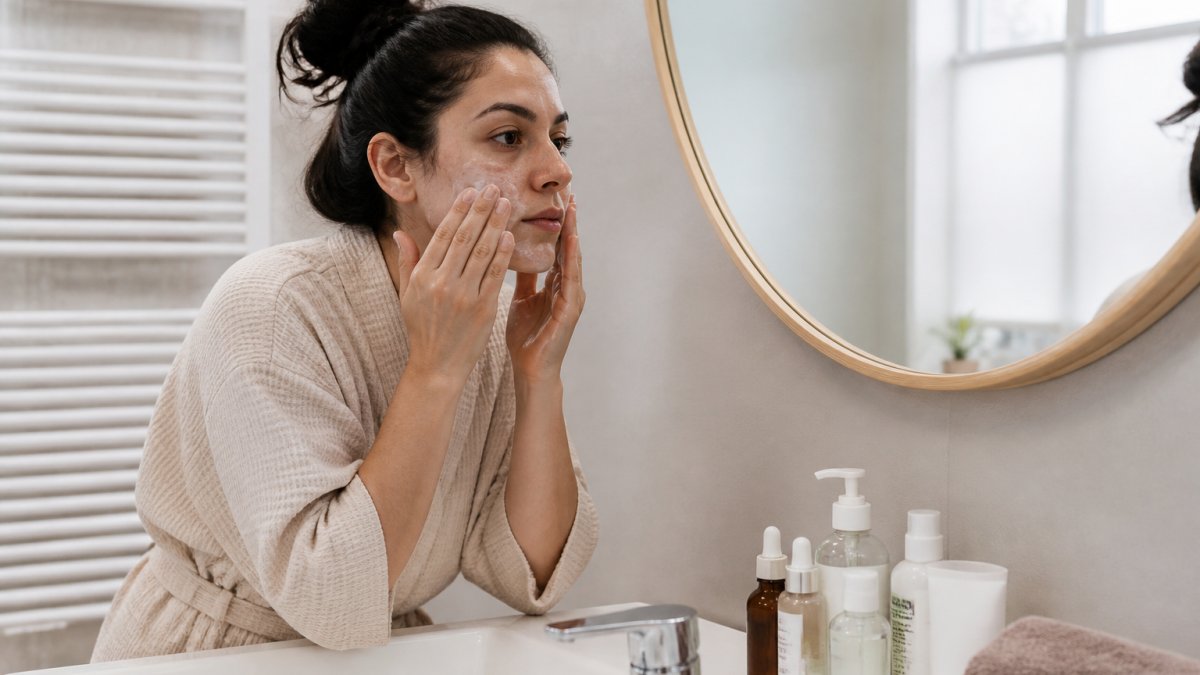
- Cleanse. Lukewarm water, gentle cleanser, fingertips only. No flannels or brushes.
- Moisturise. Even oily skin needs this. Dry skin overproduces oil.
- Sunscreen. SPF 30+, every morning, indoors or out.
Keep it to three steps. Morning skin is often calmer, so this is the time to skip actives entirely.
Evening Routine
- Remove sunscreen and makeup. A micellar water or oil cleanser first if you wear either.
- Cleanse. Same gentle cleanser as the morning.
- Treat. Apply your one active to dry skin. Start twice a week.
- Moisturise. Seal it in.
Give any new routine at least six weeks. Skin cell turnover takes time, and postpartum skin is slower to recover.
Breastfeeding Safe Acne Treatment: What You Can and Cannot Use
Treatment suitability during breastfeeding depends entirely on the product, and not every acne treatment should be assumed safe. According to Cleveland Clinic guidance on postpartum acne, a healthcare provider may recommend benzoyl peroxide or salicylic acid while breastfeeding, but some products are not suitable. Always check with your GP, pharmacist or health visitor before starting anything new.
Here's a practical breakdown:
| Treatment | Generally Considered | Notes |
|---|---|---|
| Benzoyl peroxide | Often suitable | Start at 2.5%, not 10% |
| Salicylic acid | Often suitable | Leave-on or wash, low strength |
| Azelaic acid | Commonly recommended | Gentle, well tolerated |
| Glycolic acid | Use with caution | Can sting; patch test first |
| Retinoids | Avoid | Not recommended while feeding |
| Oral isotretinoin | Avoid | Prescription only; not while feeding |
A clinical practice guide on adult female acne evaluated azelaic acid 20% applied twice daily in a study of 241 women, alone or alongside other treatments. It's a well-studied option for adult female acne, and many clinicians favour it for its gentle profile.
What most guides miss: the vehicle matters as much as the active. A 2% salicylic acid in a soothing base beats a 2% in an alcohol-heavy toner every time.
Natural Remedies for Postpartum Acne: What Helps and What to Skip
Natural remedies for postpartum acne can help, but only a few have real support behind them. The rest range from harmless to actively irritating.
Worth trying:
- Tea tree oil (diluted). A drop in your moisturiser, not neat on skin.
- Green tea compresses. Cooling, anti-inflammatory, cheap.
- Niacinamide. Not strictly "natural", but plant-derived and gentle.
- Oat-based masks. Calming for a reactive barrier.
Skip these:
- Lemon juice. Too acidic. It burns and causes sun sensitivity.
- Bicarbonate of soda scrubs. Disrupts your skin's pH.
- Coconut oil on the face. Comedogenic for many people.
- Toothpaste on spots. It's a myth, and it damages skin.
None of these replace a proper treatment active. Think of them as support, not the main event.
Common Mistakes That Make Postpartum Hormonal Acne Worse
The biggest mistake is treating postpartum skin like teenage skin. It's drier, more reactive, and slower to heal. Aggressive scrubbing, high-strength acids, and constant product switching all backfire.
Others we see often:
- Over-washing. Twice a day is plenty. More strips the barrier.
- Skipping moisturiser because skin feels oily. This makes oil worse.
- Picking and squeezing. Postpartum skin scars more easily. Hands off.
- Changing routine every week. You never give anything time to work.
- Ignoring sleep and stress. Cortisol drives oil production. It's not just products.
If you're exhausted and running on broken sleep, your skin reflects that. Be patient with it.
When to See a GP or Dermatologist About Postpartum Hormonal Acne
Book an appointment if your acne is painful, cystic, or leaving marks, or if it hasn't improved after three months of a consistent routine. A GP can prescribe stronger options or refer you to a dermatologist.
Go sooner if you notice:
- Deep, painful nodules rather than surface spots
- Scarring starting to form
- Sudden severe flare, especially with fever
- Signs of infection: heat, swelling, pus
Postpartum is also a time when other skin changes appear, including laxity, texture shifts and pigmentation. Some of these respond well to professional treatment once you've finished breastfeeding and your skin has settled.
Frequently Asked Questions
What causes acne after giving birth?
Acne after birth is driven by the sharp drop in oestrogen and progesterone that follows delivery. Those hormones kept sebum production in check during pregnancy, and when they fall, your skin can respond with excess oil, clogged pores and inflammation. Prolactin, the hormone that supports breastfeeding, can also influence breakouts. The result is postpartum hormonal acne, which often appears along the jawline, chin and cheeks rather than across the whole face.
Can I use salicylic acid for acne while breastfeeding?
A low-strength salicylic acid cleanser or toner is generally considered acceptable while breastfeeding, since only a small amount is absorbed through the skin. Leave-on products at higher concentrations are best discussed with a GP, pharmacist or dermatologist first. Cleveland Clinic notes that a healthcare provider may recommend benzoyl peroxide or salicylic acid for acne while breastfeeding, but also cautions that some products may not be suitable. Always check before starting any new treatment.
How long does postpartum acne usually last?
For most women, postpartum hormonal acne settles within three to six months as hormone levels stabilise. If you stop breastfeeding, the hormonal shift can trigger a second flare before things calm down. Some women find breakouts persist for a year or longer, particularly those with a history of PCOS or pre-existing acne. If yours is still active after twelve months, it is worth asking your GP about a referral.
When should I speak to a GP or dermatologist about postpartum acne?
Book an appointment if your acne is painful, widespread, or leaving marks and scars, or if over-the-counter options have not helped after two to three months. You should also seek advice if you notice signs of infection, such as swelling, heat or pus, or if your skin is reacting badly to products. A GP can prescribe treatments that are safe while breastfeeding, and a dermatologist can offer targeted options for persistent or scarring acne.
Postpartum skin changes can feel like a stranger in the mirror, and home routines only go so far once texture, scarring or laxity set in. At Glow with Fatima, we build bespoke plans around evidence-based treatments, using CE and UKCA-certified medical-grade equipment and a three-session protocol designed for visible, lasting results. We'll assess your skin honestly and tell you what will actually help. Book a free consultation and let's map out a plan that fits your skin and your stage of life.
Your questions, answered
What causes acne after giving birth?
Acne after birth is driven by the sharp drop in oestrogen and progesterone that follows delivery. Those hormones kept sebum production in check during pregnancy, and when they fall, your skin can respond with excess oil, clogged pores and inflammation. Prolactin, the hormone that supports breastfeeding, can also influence breakouts. The result is postpartum hormonal acne, which often appears along the jawline, chin and cheeks rather than across the whole face.
Can I use salicylic acid for acne while breastfeeding?
A low-strength salicylic acid cleanser or toner is generally considered acceptable while breastfeeding, since only a small amount is absorbed through the skin. Leave-on products at higher concentrations are best discussed with a GP, pharmacist or dermatologist first. Cleveland Clinic notes that a healthcare provider may recommend benzoyl peroxide or salicylic acid for acne while breastfeeding, but also cautions that some products may not be suitable. Always check before starting any new treatment.
How long does postpartum acne usually last?
For most women, postpartum hormonal acne settles within three to six months as hormone levels stabilise. If you stop breastfeeding, the hormonal shift can trigger a second flare before things calm down. Some women find breakouts persist for a year or longer, particularly those with a history of PCOS or pre-existing acne. If yours is still active after twelve months, it is worth asking your GP about a referral.
When should I speak to a GP or dermatologist about postpartum acne?
Book an appointment if your acne is painful, widespread, or leaving marks and scars, or if over-the-counter options have not helped after two to three months. You should also seek advice if you notice signs of infection, such as swelling, heat or pus, or if your skin is reacting badly to products. A GP can prescribe treatments that are safe while breastfeeding, and a dermatologist can offer targeted options for persistent or scarring acne.