ultimate-guide
Non-Surgical Acne Scar Treatment in London: 2026 Guide
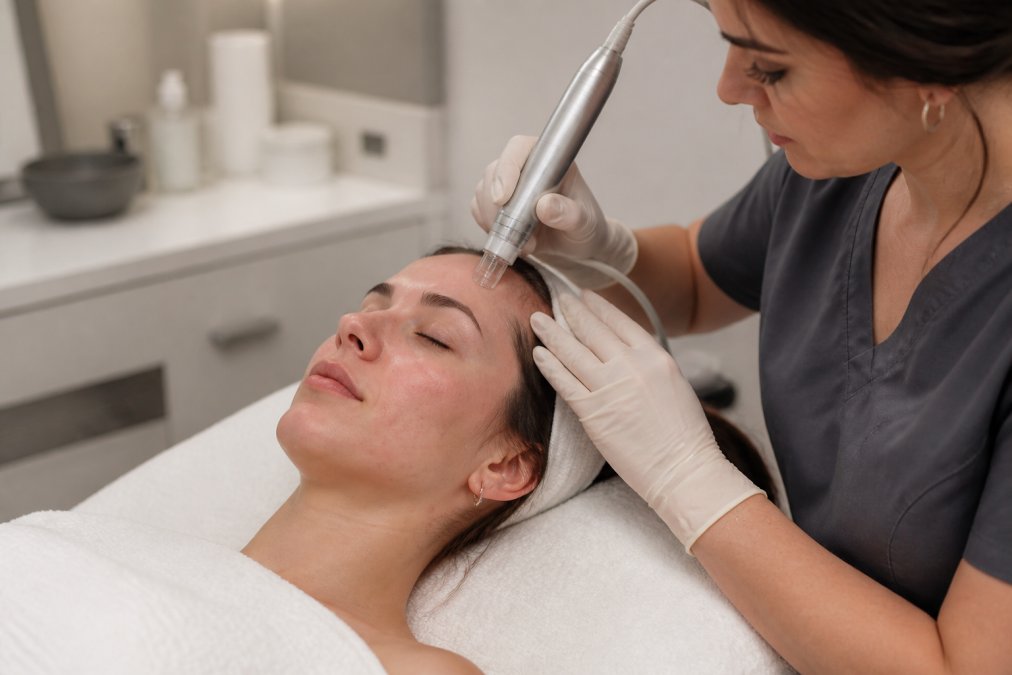
Table of Contents
- What Counts as Non-Surgical Acne Scar Treatment
- Comparing Non-Surgical Acne Scar Treatments: What the Evidence Shows
- Microneedling for Acne Scars: How It Works and Who It Suits
- Acne Scar Removal Cost: What Drives the Price
- Recovery Time for Acne Scar Treatment: What to Expect
- How to Choose a Non-Surgical Acne Scar Treatment Clinic
- Frequently Asked Questions
Last Updated: September 17, 2026
What Counts as Non-Surgical Acne Scar Treatment
Non-surgical acne scar treatment in London covers any clinical procedure that rebuilds collagen and smooths scar tissue without cutting or stitching. According to a systematic review of acne scarring treatments, outcomes range from 10% to 100% improvement depending on technique and scar type. The three workhorses are energy-based resurfacing, subcision, and controlled chemical reconstruction.
So what actually earns a place in a treatment plan for acne scars?
- Microneedling for overall texture and shallow depth
Comparing Non-Surgical Acne Scar Treatments: What the Evidence Shows
Evidence from 2026 consistently favours combination protocols over single-modality treatment. A meta-analysis in Lasers in Medical Science confirms that pairing fractional CO2 lasers with platelet-rich plasma produces better results than laser alone. The reason is straightforward: you are treating different scar types with different mechanisms, in the same plan.
Fractional CO2 Laser Resurfacing
Fractional CO2 laser resurfacing is the strongest evidence-backed option for textural acne scarring. It creates columns of controlled injury that trigger new collagen, and clinical data show roughly 75% of patients achieve significant scar volume reduction (PMC, NIH, 2025). The trade-off is downtime, typically five to seven days of redness and flaking. It is not a lunchtime treatment, and anyone promising otherwise is overselling.
Subcision and TCA CROSS
Subcision releases the fibrous bands pulling a scar downward, which is why it works on rolling scars that lasers alone cannot lift. Reported improvement runs from 10% to 100% (systematic review of acne scar treatments, 2017), a wide range that reflects how much depends on operator skill and scar severity. TCA CROSS is the narrow specialist: a high-concentration acid applied precisely into ice-pick scars to rebuild the base.
| Treatment | Best For | Downtime | Sessions |
|---|---|---|---|
| Fractional CO2 laser | Rolling, boxcar texture | 5-7 days | 2-3 |
| Subcision | Tethered rolling scars | 2-4 days | 2-4 |
| TCA CROSS | Ice-pick scars | 3-5 days | 3-4 |
| Microneedling | Texture, shallow depth | 1-2 days | 3-6 |
What to Ignore: Microdermabrasion and Other Weak Options
Microdermabrasion achieves the least significant results of any non-surgical modality for acne scarring, per the same review. It abrades the surface; scarring lives in the dermis. If a clinic leads with microdermabrasion for scar revision, that tells you something about how they think.
Microneedling for Acne Scars: How It Works and Who It Suits
Microneedling for acne scars uses fine needles to create controlled micro-injuries in the dermis, prompting collagen and elastin production without removing the top layer of skin. Research published via ResearchGate in 2024 found it consistently improves scar depth, skin texture, and patient satisfaction as a standalone therapy.
Who suits it best? Clients with mild to moderate textural scarring, those who cannot afford laser downtime, and anyone building a longer-term collagen plan. It is also the most sensible entry point if you have never had a clinical treatment before.
The honest limitation: microneedling will not lift a tethered rolling scar. Depth stays roughly where it is.
Acne Scar Removal Cost: What Drives the Price
Acne scar removal cost depends on the technology used, the number of sessions, the size of the treatment area, and the practitioner's level of specialisation.
Rather than quote a headline figure, ask any clinic to break the price down across:
- Consultation and mapping of scar types
- Per-session cost and whether consumables are included
- Number of sessions in the recommended protocol
- Aftercare products and review appointments
Glow with Fatima prices each plan after assessment. Book a free consultation for current pricing rather than relying on a generic online range.
Recovery Time for Acne Scar Treatment: What to Expect
Recovery time for acne scar treatment ranges from one day to a week, depending on which modality you have. Microneedling typically settles within 24 to 48 hours: redness fades, makeup can usually resume the next day.
Plan around your calendar, not the other way round.
How to Choose a Non-Surgical Acne Scar Treatment Clinic
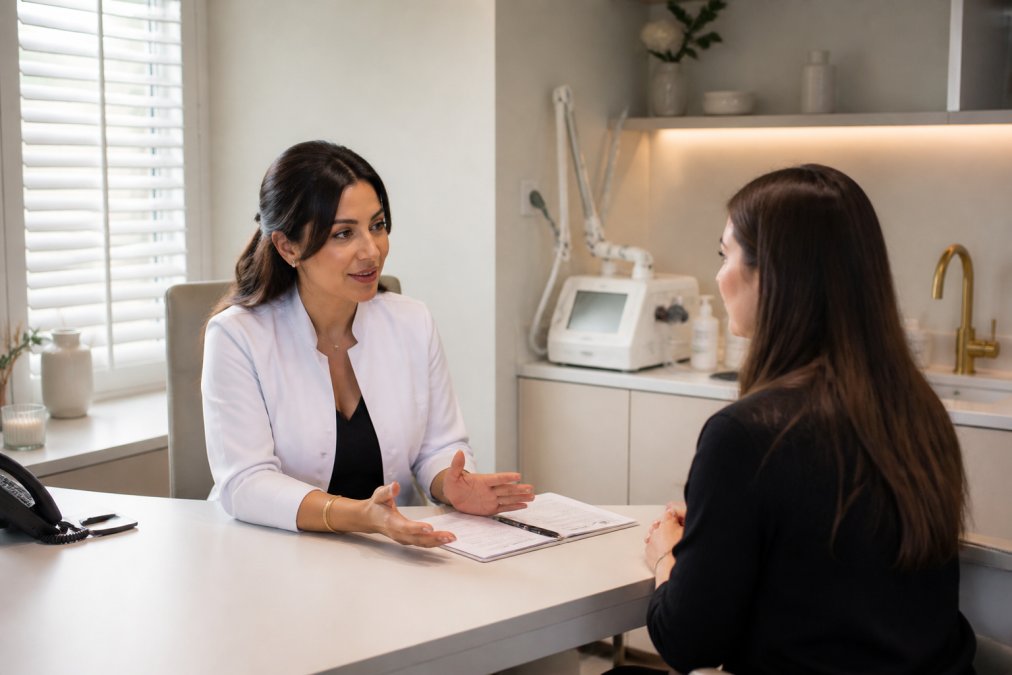
The best clinic for non-surgical acne scar treatment is one that assesses your scar types before recommending a device. Scar revision is a diagnostic exercise first and a treatment second. A clinic that skips mapping is guessing.
Ask these before you book:
- Does the practitioner hold a clinical care or medical background?
- Are the devices CE and UKCA certified for medical-grade use?
- Is the protocol three sessions or more, with review points?
- Will they tell you honestly if your scarring needs a surgical referral?
- Can they show documented before-and-after outcomes?
That last point matters. A published case study from Mr Ioannis Goutos documents a 12-month multi-modal plan successfully managing severe facial scarring, which shows what structured, staged treatment can achieve. Glow with Fatima works to the same principle: a three-session protocol, medical-grade equipment, and a plan built around your specific scar pattern rather than a fixed package.
Frequently Asked Questions
What is the most effective non-surgical treatment for acne scars?
There is no single best option. Clinical consensus for 2026 identifies microneedling as an effective non-surgical modality. A practitioner will match the method to your scar type.
How many sessions are typically required for acne scar reduction?
It depends on the treatment and severity. Many clinics use a structured protocol, such as three sessions spaced several weeks apart, to allow collagen remodelling between appointments. Your practitioner should set a realistic session count after assessing your scarring in person.
Are non-surgical acne scar treatments painful?
Most are tolerable with local anaesthetic cream. Microneedling is often described as a prickling sensation. Tell your practitioner if you have a low pain threshold so they can adjust.
What is the recovery time for acne scar treatment?
Recovery varies by method. Microneedling usually involves 24 to 48 hours of redness. Clinics are increasingly prioritising minimal-downtime interventions, but you should still plan around your work and social calendar. Ask your practitioner for a written aftercare plan before booking.
Can acne scars be treated on all skin types?
Most non-surgical options work across skin tones, but some carry higher pigmentation risk on darker skin. Practitioners may favour microneedling where appropriate. A PMC review of acne scarring treatments notes that outcomes depend heavily on correct patient selection. A thorough consultation, including a patch test where relevant, is the safest way to confirm suitability.
How do I choose a reputable aesthetic clinic for scar treatment?
Look for evidence-based practice: a practitioner with a clinical care background, medical-grade equipment that is CE or UKCA certified, and a treatment plan built around your specific scar type. Ask how many sessions they recommend, what aftercare they provide, and whether they offer a consultation before you commit. Be cautious of any clinic promising complete scar removal, since the realistic goal is meaningful improvement.
Is microneedling for acne scars worth trying before laser?
For many people, yes. ResearchGate (2024) found that microneedling as a standalone therapy consistently improves scar depth, skin texture, and patient satisfaction. It also involves less downtime than fractional laser, which suits those who cannot take a week off. If your scarring is deep or tethered, your practitioner may combine microneedling with subcision or recommend laser instead.
Severe scarring that has resisted years of products is exactly the case where a structured clinical plan earns its place. Glow with Fatima builds each protocol around evidence-based treatment selection, a three-session structure for optimal results, and CE and UKCA-certified medical-grade equipment, all delivered by a practitioner with a clinical care background. Get started with Glow with Fatima and book a free consultation to find out what your scarring will actually respond to.
Your questions, answered
What is the most effective non-surgical treatment for acne scars?
There is no single best option. Clinical consensus for 2026 identifies microneedling as an effective non-surgical modality. A practitioner will match the method to your scar type.
How many sessions are typically required for acne scar reduction?
It depends on the treatment and severity. Many clinics use a structured protocol, such as three sessions spaced several weeks apart, to allow collagen remodelling between appointments. Your practitioner should set a realistic session count after assessing your scarring in person.
Are non-surgical acne scar treatments painful?
Most are tolerable with local anaesthetic cream. Microneedling is often described as a prickling sensation. Tell your practitioner if you have a low pain threshold so they can adjust.
What is the recovery time for acne scar treatment?
Recovery varies by method. Microneedling usually involves 24 to 48 hours of redness. Clinics are increasingly prioritising minimal-downtime interventions, but you should still plan around your work and social calendar. Ask your practitioner for a written aftercare plan before booking.
Can acne scars be treated on all skin types?
Most non-surgical options work across skin tones, but some carry higher pigmentation risk on darker skin. Practitioners may favour microneedling where appropriate. A PMC review of acne scarring treatments notes that outcomes depend heavily on correct patient selection. A thorough consultation, including a patch test where relevant, is the safest way to confirm suitability.
How do I choose a reputable aesthetic clinic for scar treatment?
Look for evidence-based practice: a practitioner with a clinical care background, medical-grade equipment that is CE or UKCA certified, and a treatment plan built around your specific scar type. Ask how many sessions they recommend, what aftercare they provide, and whether they offer a consultation before you commit. Be cautious of any clinic promising complete scar removal, since the realistic goal is meaningful improvement.
Is microneedling for acne scars worth trying before laser?
For many people, yes. ResearchGate (2024) found that microneedling as a standalone therapy consistently improves scar depth, skin texture, and patient satisfaction. It also involves less downtime than fractional laser, which suits those who cannot take a week off. If your scarring is deep or tethered, your practitioner may combine microneedling with subcision or recommend laser instead.