blog
Preventative Injectables vs Topical Skincare for 30s
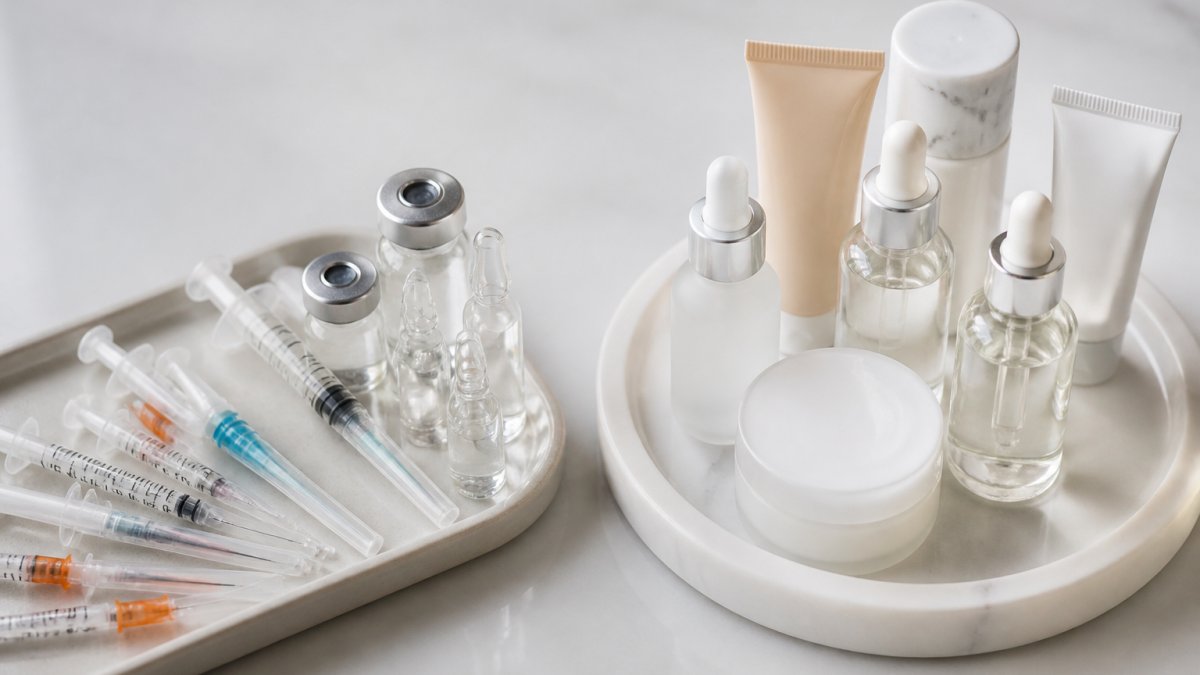
Table of Contents
- Preventative Injectables vs Topical Skincare for 30s: What Actually Differs
- Preventative Botox in Your 30s: What the Evidence Says
- Retinoids for Fine Lines: The Topical Workhorse
- Daily SPF for Preventing Premature Skin Ageing: The Non-Negotiable
- When to Start Anti-Ageing Treatments: A Decision Framework
- Where Each Approach Wins: Use Cases for Your 30s
- Choosing a Practitioner and Combining Approaches Safely
- Conclusion: Building a Sensible Plan for Your 30s
- Frequently Asked Questions
Last Updated: October 14, 2026
Preventative Injectables vs Topical Skincare for 30s: What Actually Differs
Preventative injectables are neuromodulator injections used at low doses to soften the muscle movement that etches lines into skin over time, while topical skincare works on the skin's surface to support collagen, cell turnover and barrier health. The two approaches act on different layers of the face, which is why the preventative injectables vs topical skincare for 30s debate rarely has a single winner. At Glow with Fatima, we see clients every week who assume one cancels out the other. It doesn't. Each does something the other cannot.

Here is the honest split. Injectables reduce dynamic movement; topicals improve skin quality. Most people in their thirties need a considered mix of both, not a loyalty pledge to one.
A review published via Skin anti-ageing strategies on PubMed Central outlines how topical, systemic and procedural approaches target ageing through different mechanisms, which is the core reason combining them is common practice.
Preventative Botox in Your 30s: What the Evidence Says
Preventative Botox in your 30s is a low-dose approach to softening expression lines before they become static. It is not about freezing the face. Clinic guidance suggests most patients in their twenties and thirties need only small adjustments, low-dose injectables or light skin treatments rather than full correction.
That distinction matters. A forehead that never moves for a decade can lose tone, and heavy-handed dosing is the fastest route to the "done" look people fear. The goal is to keep movement natural while interrupting the repeated creasing that eventually leaves a permanent line.
Low-Dose Approaches and Why Less Is Often More
Small doses, placed precisely, soften expression without erasing it. We would rather under-treat and review than over-treat and wait months for it to fade. If you are new to injectables, start conservatively.
Retinoids for Fine Lines: The Topical Workhorse
Retinoids for fine lines remain the most evidence-backed topical ingredient available without a prescription. They speed up cell turnover and support collagen production over months, not days.
The catch is tolerance. Clinic guidance notes that dermatologists generally recommend starting daily retinoids in the late twenties or thirties unless treating acne, and warns that overuse irritates the skin. A pea-sized amount, two to three nights a week to begin with, is plenty.
Starting Retinoids Without Wrecking Your Skin Barrier
Introduce slowly, buffer with moisturiser, and never layer a retinoid with acids on the same night. If your skin stings, flakes or turns red, you have gone too fast. Pull back rather than pushing through.
Daily SPF for Preventing Premature Skin Ageing: The Non-Negotiable
Daily SPF for preventing premature skin ageing does more than any serum or injection you can buy. UV exposure is the single largest driver of visible ageing, and no treatment undoes unprotected sun damage faster than it accumulates.
Broad-spectrum SPF 30 or higher, every morning, reapplied through the day, is the foundation the rest of your routine sits on. Skip it and you are funding treatments to repair what a five-minute habit would have prevented.
When to Start Anti-Ageing Treatments: A Decision Framework
There is no universal start date. Use your skin, not your birthday, to decide.
| Your Situation | Sensible First Step | Why |
|---|---|---|
| Fine lines only when you smile | Daily SPF plus a retinoid | Movement lines respond well to topicals at this stage |
| Lines visible at rest | Review low-dose injectables | Static lines suggest repeated creasing has set in |
| Pigmentation or texture changes | Topicals plus a professional assessment | Surface concerns need a layered plan |
| Post-partum laxity or scarring | Professional consultation first | Hormonal and structural changes need tailored care |
A 2026 clinic article describes "prejuvenation" as a preventative approach that may begin in the late twenties or early thirties, using minimally invasive treatments to delay visible ageing. That aligns with what we see: earlier, lighter intervention beats late correction.
Where Each Approach Wins: Use Cases for Your 30s
Injectables win on expression lines. Topicals win on texture, tone and pigmentation. Neither addresses scarring or laxity on its own, which is where professional treatments come in.
If you are weighing preventative injectables against a topical routine, the deciding factor is usually the type of line or concern in front of you. A dermatology review published via Clinical, Cosmetic and Investigational Dermatology on dermatologists' perspectives on skincare routines examines how practitioners weigh the benefits and risks of multistep routines, a useful reminder that more steps do not automatically mean better skin.
At Glow with Fatima, our approach is to assess which layer of the skin is actually driving the concern before recommending anything. Our 3-session protocol, delivered using CE and UKCA-certified medical-grade equipment, is built for concerns like under-eye darkness, fine lines and acne or surgical scarring that a cream alone will not shift.
Choosing a Practitioner and Combining Approaches Safely
Choose a practitioner who explains why, not just what. Ask what the treatment does, what the realistic outcome is, and what happens if you do nothing.
Combining approaches safely means spacing them sensibly. A common sequence is SPF and retinoid daily, injectables reviewed every few months, and in-clinic treatments scheduled around both. Never stack a strong topical and an in-clinic treatment in the same week without guidance.
Conclusion: Building a Sensible Plan for Your 30s
The preventative injectables vs topical skincare for 30s question has a practical answer: start with the boring foundations, then add targeted treatment where your skin actually needs it. Most people do not need everything at once.
If you are unsure where your skin sits, Glow with Fatima offers a free consultation to map out a plan that fits your concerns, whether that is fine lines, post-partum changes or scarring. Our evidence-based treatments, clinical care background and 3-session protocol are designed to build results gradually and naturally.
Frequently Asked Questions
Are preventative injectables worth considering in your 30s?
It depends on your concerns and budget. Clinic guidance suggests most people in their 20s and 30s need only small adjustments, low-dose injectables or light skin treatments rather than extensive work. Preventative injectables can soften expression lines early, but they are not a substitute for daily SPF or retinoids. A sensible approach is to start with topical basics, then add injectables only for specific lines that bother you.
Can topical skincare prevent wrinkles on its own?
Topical skincare can improve fine lines and texture, especially with retinoids and daily SPF, but it will not stop dynamic expression lines caused by repeated muscle movement. Think of topicals as your foundation and injectables as a targeted addition for movement lines.
Should I start with skincare or injectables first?
Start with skincare. Daily SPF for preventing premature skin ageing and a retinoid for fine lines give you the strongest evidence base and the lowest risk. Give them three to six months. If expression lines still bother you, consider low-dose preventative Botox in your 30s. This order also helps you judge what each step actually does, rather than changing everything at once.
Can I combine injectables with a topical skincare routine?
Yes, and most practitioners expect you to. Keep your SPF and retinoid going, but pause strong actives for a few days around injectable appointments if your practitioner advises it, since overuse of retinoids can irritate skin. Tell your practitioner about everything you use, including prescription creams. Combining approaches tends to give better overall results than relying on one alone.
Your thirties are the decade where small, consistent choices compound. Get the foundation right, then invest in targeted care where it counts. Book a free consultation with Glow with Fatima and start with a plan built around your skin, not a template.
Your questions, answered
Are preventative injectables worth considering in your 30s?
It depends on your concerns and budget. Clinic guidance suggests most people in their 20s and 30s need only small adjustments, low-dose injectables or light skin treatments rather than extensive work. Preventative injectables can soften expression lines early, but they are not a substitute for daily SPF or retinoids. A sensible approach is to start with topical basics, then add injectables only for specific lines that bother you.
Can topical skincare prevent wrinkles on its own?
Topical skincare can improve fine lines and texture, especially with retinoids and daily SPF, but it will not stop dynamic expression lines caused by repeated muscle movement. Think of topicals as your foundation and injectables as a targeted addition for movement lines.
Should I start with skincare or injectables first?
Start with skincare. Daily SPF for preventing premature skin ageing and a retinoid for fine lines give you the strongest evidence base and the lowest risk. Give them three to six months. If expression lines still bother you, consider low-dose preventative Botox in your 30s. This order also helps you judge what each step actually does, rather than changing everything at once.
Can I combine injectables with a topical skincare routine?
Yes, and most practitioners expect you to. Keep your SPF and retinoid going, but pause strong actives for a few days around injectable appointments if your practitioner advises it, since overuse of retinoids can irritate skin. Tell your practitioner about everything you use, including prescription creams. Combining approaches tends to give better overall results than relying on one alone.