ultimate-guide
Rosacea Treatments: A 2026 Guide
Table of Contents
- Understanding Rosacea and Treatment Options
- Best Skincare for Rosacea: Ingredients and Formulations
- Laser Treatment for Rosacea: How It Works and Results
- Medical and Oral Treatments for Rosacea
- Rosacea Triggers and Management Strategies
- Clinical Consultation: Why Professional Assessment Matters
- Building Your Rosacea Treatment Plan
- Frequently Asked Questions
Last Updated: September 24, 2026
Understanding Rosacea and Treatment Options
Rosacea is a chronic inflammatory skin condition characterised by facial redness, visible blood vessels, and sometimes acne-like bumps. The condition affects approximately 1 in 20 people in the UK, with prevalence peaks occurring at two distinct ages: between 20-30 years and again between 40-50 years. At Glow with Fatima, we offer tailored treatment strategies that address both the visible symptoms and underlying triggers.
The condition manifests in different ways depending on the subtype. Some people experience persistent facial flushing and erythema, whilst others develop papules and pustules that resemble acne. A third group notices prominent telangiectasias, dilated blood vessels visible on the skin's surface. Understanding which presentation you're dealing with is essential because it shapes your treatment approach.
What makes rosacea particularly frustrating is that it's not simply a cosmetic concern. The condition can affect quality of life, triggering anxiety and social withdrawal. Yet here's what's encouraging: modern rosacea treatments have evolved significantly. A systematic review of 15 studies involving 537 patients found that 85% of patients observed an overall response to vascular-targeted and anti-inflammatory therapies, with 23.5% achieving greater than 75% improvement after just 8 weeks of treatment.
The key is matching your treatment to your specific presentation and identifying what triggers your flares. Rosacea treatments work best when they're combined with lifestyle modifications and a consistent skincare routine designed to support your skin barrier.
Best Skincare for Rosacea: Ingredients and Formulations
Skincare forms the foundation of any rosacea management plan. Rather than chasing trendy ingredients, focus on formulations that strengthen your skin barrier and reduce inflammation. The most effective skincare for rosacea contains niacinamide, ceramides, and allantoin, ingredients that repair and protect rather than irritate.
Niacinamide is particularly valuable because it reduces sebum production, minimises pore appearance, and possesses anti-inflammatory properties. Ceramides work by restoring the lipid barrier that rosacea-prone skin often lacks, reducing transepidermal water loss and sensitivity. Allantoin soothes irritated skin and promotes healing.
What many people get wrong is using active ingredients too aggressively. Retinoids, vitamin C serums, and exfoliating acids can trigger flares in rosacea-prone skin, even though they're beneficial for other conditions. Your skincare routine should be gentle but effective, think of it as supporting your skin rather than transforming it.
A solid routine includes:
- A fragrance-free cleanser that doesn't strip your skin
- A hydrating toner or essence to restore moisture
- A targeted serum with calming ingredients
- A lightweight, non-comedogenic moisturiser
- Broad-spectrum SPF 30 or higher daily (sun exposure is a major rosacea trigger)
The British Association of Dermatologists emphasises that consistent skincare matters more than expensive products. Use the same routine for at least 4-6 weeks before assessing whether it's working for you.
Laser Treatment for Rosacea: How It Works and Results
Laser therapy represents one of the most effective approaches for treating persistent rosacea, particularly the vascular component. Intense pulsed light (IPL) and laser treatments target the dilated blood vessels beneath the skin's surface, reducing their visibility and the associated redness.
Here's how it works: the laser emits wavelengths that are absorbed by haemoglobin in the blood vessels. This causes the vessels to collapse, which reduces erythema and telangiectasias. The surrounding skin remains largely unaffected because the laser energy is specifically calibrated to target red and purple tones.
Results typically appear gradually over several sessions. Most people require 3-6 treatments spaced 4-6 weeks apart to see significant improvement. After each session, you may experience some temporary redness or mild swelling, but this usually subsides within a few hours. The advantage of laser treatment is that it addresses the vascular component directly, something topical treatments cannot do.
One important caveat: laser treatment for rosacea works best when combined with skincare and lifestyle modifications. The laser reduces existing vessels, but if you continue triggering new flares through heat exposure, spicy foods, or alcohol, you'll see limited long-term benefit. Think of it as treating the symptom whilst managing the cause simultaneously.
Clinical research has shown that laser therapy combined with anti-inflammatory medications produces superior outcomes compared to either approach alone. At Glow with Fatima, we offer integrated protocols that combine multiple modalities simultaneously.
Medical and Oral Treatments for Rosacea
Oral antibiotics remain the first-line medical treatment for moderate to severe rosacea, particularly when papules and pustules are present. Doxycycline, tetracycline, and lymecycline are commonly prescribed because they possess anti-inflammatory properties beyond their antimicrobial effects. These medications reduce cytokine production and stabilise mast cells, both of which contribute to rosacea flares.
The typical dosing involves a standard course followed by a lower maintenance dose. Many patients see improvement within 2-4 weeks, though full results take 8-12 weeks. The challenge is that oral antibiotics work whilst you're taking them, but symptoms often return once treatment stops, which is why combining them with topical treatments and lifestyle changes is critical.
Topical treatments include metronidazole, azelaic acid, and ivermectin creams. These work by reducing inflammation and, in some cases, targeting potential microbial triggers. Azelaic acid is particularly effective because it addresses both inflammatory and vascular components of rosacea. The British Association of Dermatologists recommends azelaic acid as a first-line topical option for mild to moderate disease.
For severe cases affecting the eyes (ocular rosacea), oral medications like doxycycline at low doses are often necessary. This presentation requires professional assessment because untreated ocular rosacea can lead to complications.
What's important to understand is that rosacea treatments UK residents access through the NHS typically follow a stepped approach: start with topical treatments, escalate to oral antibiotics if needed, then add laser therapy for resistant vascular symptoms. Glow with Fatima offers integrated protocols that combine multiple modalities simultaneously.
Rosacea Triggers and Management Strategies
Identifying your personal triggers is as important as any medical treatment. Common triggers include heat exposure, spicy foods, alcohol (particularly red wine), extreme temperatures, intense exercise, and stress. However, triggers vary significantly between individuals, what affects one person may not affect another.
Keeping a trigger diary for 2-3 weeks helps identify patterns. Record what you ate, environmental conditions, stress levels, and any flares that occurred. Over time, you'll notice which factors consistently precede your symptoms.
Temperature management is particularly important. Avoid very hot showers, saunas, and prolonged sun exposure. When exercising, choose activities that don't cause excessive facial flushing, swimming in cool water or indoor cycling are better than outdoor running in hot weather. Wear broad-spectrum SPF 30+ daily, even on cloudy days, because UV exposure triggers rosacea in most people.
Dietary modifications help many people. Limiting spicy foods, hot beverages, and alcohol reduces flare frequency. Stress management through meditation, yoga, or other relaxation techniques also makes a measurable difference because stress hormones trigger inflammation.
Your skincare routine itself should avoid known irritants: fragrance, essential oils, alcohol-based products, and physical scrubs. Gentle cleansing and moisturising twice daily, combined with sun protection, forms the baseline management strategy.
Clinical Consultation: Why Professional Assessment Matters
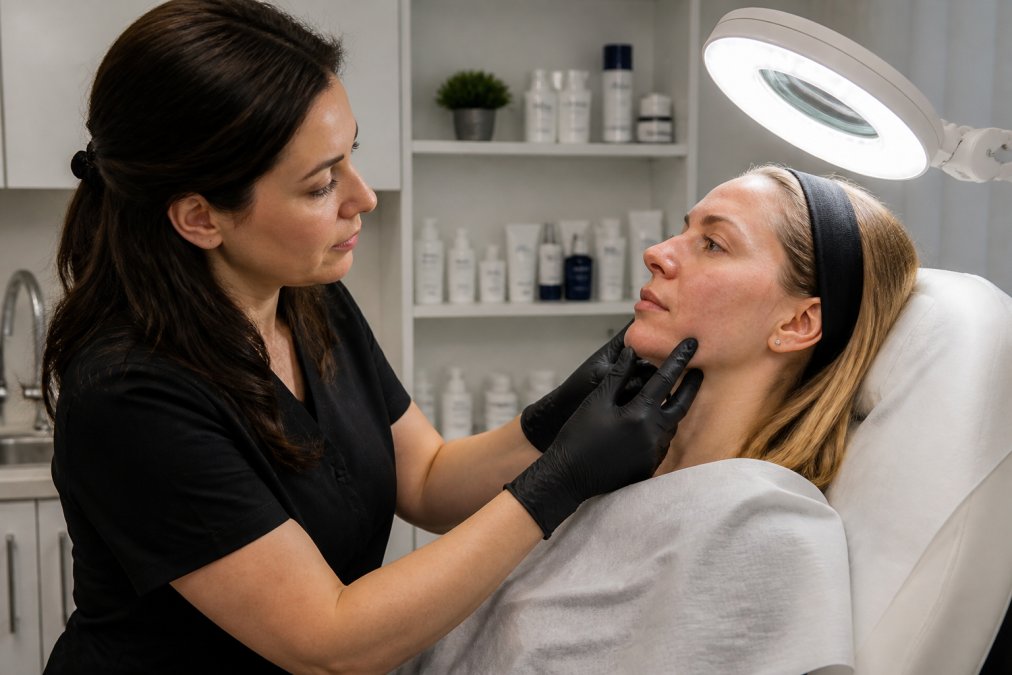
Professional assessment is essential because rosacea presentations vary widely, and what works for one subtype may not work for another. A dermatologist or trained aesthetic practitioner can distinguish rosacea from other conditions that mimic it, seborrhoeic dermatitis, lupus, or simple sensitive skin, and identify which subtype you have.
During a consultation, expect a thorough examination of your skin, a detailed history of your symptoms and triggers, and discussion of your treatment goals.
Building Your Rosacea Treatment Plan
Effective rosacea management combines multiple strategies rather than relying on a single approach. The most successful treatment plans integrate skincare, medical interventions, lifestyle modifications, and professional treatments.
| Treatment Component | Timeline | Key Benefit |
|---|---|---|
| Skincare routine | Ongoing | Strengthens barrier, reduces irritation |
| Topical anti-inflammatories | 4-8 weeks | Reduces papules and mild erythema |
| Oral antibiotics | 8-12 weeks | Addresses inflammatory component |
| Laser therapy | 3-6 sessions over 4-6 months | Targets vascular redness and telangiectasias |
| Trigger management | Ongoing | Prevents new flares |
Frequently Asked Questions
What is the most effective treatment for rosacea?
There is no single 'best' treatment, effectiveness depends on your rosacea subtype and severity. Research shows 85% of patients respond well to a combination of vascular-targeted therapies and topical anti-inflammatory treatments. Laser therapy works best for persistent redness and dilated blood vessels, whilst oral antibiotics such as doxycycline address inflammation and spots. A clinical consultation helps identify which approach suits your specific symptoms.
Can rosacea be cured permanently?
Rosacea cannot be permanently cured, but it can be effectively managed. Current treatments reduce symptoms and flare-ups significantly, though relapse rates post-treatment indicate that ongoing management is often necessary. Combining medical treatments with consistent skincare and trigger avoidance provides the best long-term control. Your practitioner can help you develop a sustainable maintenance plan.
What skincare ingredients should be avoided if you have rosacea?
Avoid harsh actives, strong acids, and irritating fragrances. Skip high-concentration vitamin C, benzoyl peroxide, and alcohol-based products. Instead, focus on barrier-repair ingredients like niacinamide, ceramides, and allantoin, which soothe and strengthen your skin. Always patch-test new products and introduce them slowly. A dermatologist can recommend specific formulations suited to your skin type.
What triggers rosacea flare-ups?
Common triggers include spicy foods, alcohol, extreme temperatures, stress, and certain skincare products. UV exposure, hot beverages, and strenuous exercise can also worsen symptoms. Identifying your personal triggers through a symptom diary helps you avoid flare-ups. Lifestyle adjustments, such as using broad-spectrum SPF 30+, managing stress, and avoiding known irritants, are essential alongside medical treatment.
Are there professional aesthetic treatments for rosacea redness?
Yes. Laser therapy is highly effective for persistent redness and dilated blood vessels, with results visible after a course of treatments. These clinical treatments work best when combined with topical anti-inflammatories and oral medication. A consultation with a qualified practitioner determines which option suits your skin.
How does a clinical consultation help with rosacea management?
A professional assessment identifies your rosacea subtype, severity, and individual triggers. This allows your practitioner to recommend a tailored treatment plan combining medical, topical, and lifestyle strategies. Evidence-based consultations also rule out other conditions mimicking rosacea and ensure you're using clinically proven treatments rather than generic skincare. Regular follow-ups monitor progress and adjust your plan as needed.
Your questions, answered
What is the most effective treatment for rosacea?
There is no single 'best' treatment—effectiveness depends on your rosacea subtype and severity. Research shows 85% of patients respond well to a combination of vascular-targeted therapies and topical anti-inflammatory treatments. Laser therapy works best for persistent redness and dilated blood vessels, whilst oral antibiotics such as doxycycline address inflammation and spots. A clinical consultation helps identify which approach suits your specific symptoms.
Can rosacea be cured permanently?
Rosacea cannot be permanently cured, but it can be effectively managed. Current treatments reduce symptoms and flare-ups significantly, though relapse rates post-treatment indicate that ongoing management is often necessary. Combining medical treatments with consistent skincare and trigger avoidance provides the best long-term control. Your practitioner can help you develop a sustainable maintenance plan.
What skincare ingredients should be avoided if you have rosacea?
Avoid harsh actives, strong acids, and irritating fragrances. Skip high-concentration vitamin C, benzoyl peroxide, and alcohol-based products. Instead, focus on barrier-repair ingredients like niacinamide, ceramides, and allantoin, which soothe and strengthen your skin. Always patch-test new products and introduce them slowly. A dermatologist can recommend specific formulations suited to your skin type.
What triggers rosacea flare-ups?
Common triggers include spicy foods, alcohol, extreme temperatures, stress, and certain skincare products. UV exposure, hot beverages, and strenuous exercise can also worsen symptoms. Identifying your personal triggers through a symptom diary helps you avoid flare-ups. Lifestyle adjustments—such as using broad-spectrum SPF 30+, managing stress, and avoiding known irritants—are essential alongside medical treatment.
Are there professional aesthetic treatments for rosacea redness?
Yes. Laser therapy is highly effective for persistent redness and dilated blood vessels, with results visible after a course of treatments. These clinical treatments work best when combined with topical anti-inflammatories and oral medication. A consultation with a qualified practitioner determines which option suits your skin.
How does a clinical consultation help with rosacea management?
A professional assessment identifies your rosacea subtype, severity, and individual triggers. This allows your practitioner to recommend a tailored treatment plan combining medical, topical, and lifestyle strategies. Evidence-based consultations also rule out other conditions mimicking rosacea and ensure you're using clinically proven treatments rather than generic skincare. Regular follow-ups monitor progress and adjust your plan as needed.